Disclosure: This post contains affiliate links. If you buy through them, we may earn a commission at no extra cost to you. As an Amazon Associate I earn from qualifying purchases.
There’s a corner of my couch that tells a story. It’s the corner closest to the window, and it’s covered in a frayed, pilled, deeply scarred patch of fabric that my cat Tofu has been methodically renovating for the past year. I’ve tried to fix it with tape. I’ve tried to fix it with sprays. I’ve tried to fix it with my sternest voice, which my cat interprets as background noise.
Here’s what I learned after a year of losing to a couch: cats don’t scratch to be destructive. They scratch because it’s literally what cats are built to do — it marks territory, it stretches the muscles, it sheds the outer layers of their claws. Punishing a cat for scratching is like punishing a fish for swimming. It doesn’t work, and it makes everyone miserable.
The fix isn’t stopping the scratching. It’s redirecting it.
Why cats scratch (and why they picked your couch)
Scratching does four jobs for a cat:
- It sharpens and conditions the claws — removing the old outer sheath.
- It stretches the whole body, especially the back and shoulders.
- It marks territory with both scent glands in the paws and visible scratches.
- It relieves stress and communicates presence to other cats.
And why your couch? Because it’s the right material, in the right place, with the right stability. Cats love upholstery because it has texture and gives slightly — it’s basically a giant, expensive scratching post that happens to be where you sit. The corner of the couch near the window is prime territory: it’s in a high-traffic social spot, near a window, and it’s the perfect height for a full-body stretch.
The scratching post rules nobody tells you
Buying a scratching post isn’t enough. The post has to win the competition against your couch, which means it needs:
- The right material. Cats have preferences: sisal rope, carpet, cardboard, wood. My cat ignores carpet but uses sisal religiously. Try a few materials and see which one your cat actually uses.
- The right height. A post needs to be tall enough for a full stretch. A cat stretching on the couch reaches up — a post that’s shorter than your cat’s full stretch loses.
- The right location. This is the biggest one. Put the post where the cat already scratches — not in a corner “to be neat.” The couch corner that’s being destroyed? Put a post right there. Cats are creatures of location first.
- Stability. A wobbly post is a failed post. It needs to be heavy or anchored, or the cat will choose the couch that doesn’t fall over.
- Multiple posts. One post in the living room isn’t enough. The cat scratches in multiple spots for multiple reasons — give them options in each spot.
The redirect method that actually worked
Here’s the step-by-step that finally saved my couch:
1. Put a post in the crime scene
I moved a sisal post to within two feet of the destroyed couch corner. Not in a different room “to encourage exploration.” Right there, in the line of sight of the couch.
2. Make the couch less appealing
This is where the temporary deterrents come in: double-sided tape or sticky pads on the scratched area, or a scratching deterrent spray (the bitter/citrus types). These aren’t punishments — they just make the couch less pleasant while the post is more pleasant. Cats move toward the better option naturally.
3. Catch them in the act and redirect
The most effective single move I made: when I saw Tofu start to scratch the couch, I’d clap once (not yell — a neutral sound), get his attention, and guide him to the post. Then I’d scratch the post myself — cats are copycats, and demonstrating the post works is weirdly effective. The moment he scratched the post, treats. Real treats.
4. Reward post use forever
Every time I see the post being used, I reinforce it. Not every time, but often — a treat, a pet, a “good boy.” The couch corner is now a post corner, and the post wins on location alone.
5. Maintain the post
Posts get worn and less appealing. Flip, rotate, or replace sisal rope when it’s shredded. A fresh, textured post is a post cats use.
Materials, angles, and the DIY post that beats the couch
Not all scratching posts are created equal, and the difference between a post that gets used and a post that becomes a very expensive doorstop is usually in the details. Here’s what I learned by testing roughly a dozen of them.
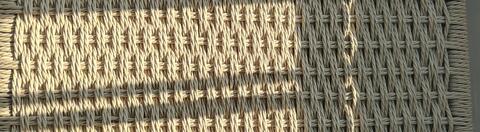
Sisal is the default winner, but not all sisal. Tightly woven sisal rope gives cats that satisfying resistance they’re looking for, and it’s the texture most cats pick over carpet. Loose or thin sisal frays fast and loses its appeal. If you have a cat who prefers carpet, a carpet-covered post or a flat cardboard scratcher might beat the sisal one — the trick is to watch where your cat scratches and match the material. My cat Tofu ignores carpet entirely and goes straight for sisal; my foster kitten was the opposite. Same species, different preferences.
Height beats width, always. A cat scratching is doing a full-body stretch, from front paws to back feet. A post that’s too short means the cat can’t get the stretch, and it’ll go find something that works — usually your couch arm or the edge of a rug. I now buy posts that are at least as tall as my cats’ full stretch, which is taller than you’d think. Wall-mounted sisal pads are the secret weapon here: they’re cheap, they mount at exactly the right height, and they take up zero floor space.
Angle matters more than people admit. Some cats prefer vertical scratching, some prefer horizontal (this is usually the carpet and rug scratch), and some like a diagonal. If your cat scratches the floor or rugs, a vertical post will never fully satisfy them — you need a flat cardboard or carpet scratcher. If your cat scratches the couch arm, vertical sisal is the match. Watch the position your cat chooses, and buy to match.
Stability is non-negotiable. A post that wobbles, tips, or slides gets abandoned in a day. I anchor every tall post to the wall with a bracket, and I put heavy cardboard scratchers on a non-slip mat. The couch doesn’t wobble, so the post can’t either.
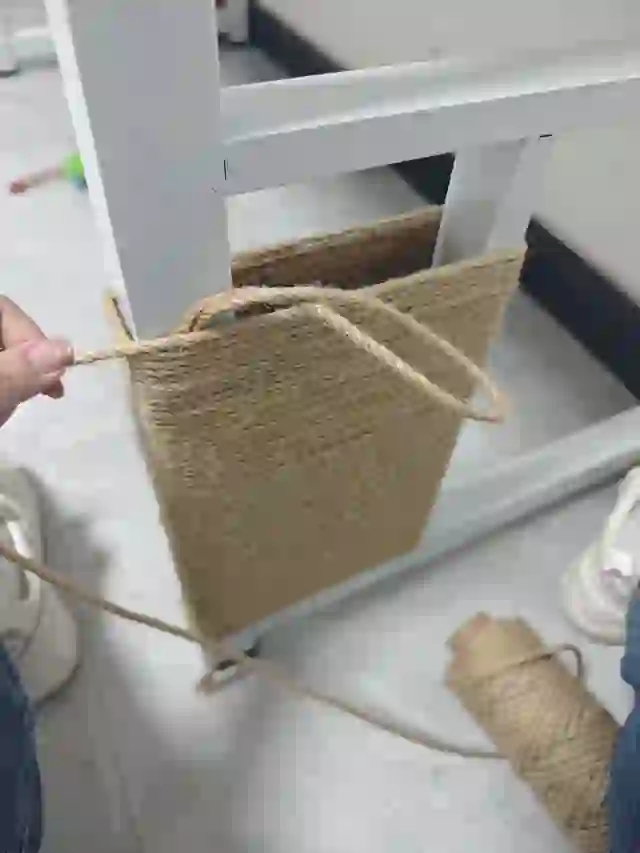
The DIY option that actually works. If you’re not ready to spend money, take a length of thick sisal rope, wrap it tightly around a sturdy wooden post or a PVC pipe, and anchor the whole thing to a heavy base. I made one for my foster kitten in an afternoon, and it worked as well as anything I’ve bought. The material and the stability matter more than the price tag.
If you’re protecting specific furniture
Some things are sacred. For those:
- Furniture protectors work: clear acrylic shields, scratch guards, or even just a throw blanket with a texture cats dislike over the vulnerable spot.
- Anti-scratch sprays are hit or miss — test on a small area first, and remember they need reapplication.
- Nail caps (like Soft Claws) are a humane option for cats who won’t stop, though I’ve found most cats tolerate them after an adjustment period. They don’t stop the scratching motion — they stop the damage.
- Keep nails trimmed. Shorter nails cause less damage and less need to condition. The grooming tools guide has the details on making nail trims survivable.
The no-declaw rule and the tools that replace it
Let me be direct about the elephant in the room: declawing is not a scratching solution, and it’s not something I’ll ever recommend. It’s a surgical amputation of the last joint of each toe — the equivalent of removing your fingers at the last knuckle — and it can cause lifelong pain, litter box avoidance, and behavior problems. It’s banned in many countries for good reason. If your vet ever suggests it casually, get a second opinion.
The humane tools that actually work instead:
Nail caps, done right. Soft Claws-style nail caps are little plastic covers that glue over the claw tip and stop the damage without stopping the cat. They take some getting used to — my cat walked around like he’d been given tiny high heels for a day — but most cats adjust within a week, and they last about four to six weeks before the caps shed with the claw’s outer layer. The trick is application: trim the nail first, fill the cap a third full with the glue, and hold for a few seconds. Have a helper and a towel. Don’t cap every nail the first time — do two or three, reward heavily, and finish the rest the next day.
Regular nail trims. Shorter claws do less damage, need less conditioning, and are less likely to get stuck in fabric. I trim every two to three weeks, and the grooming tools guide has the full survival guide — the key is high-value treats, a good light, and stopping while you’re ahead.
Deterrent sprays, honestly evaluated. The citrus and bitter sprays work for some cats and are completely ignored by others. Test on a small area first — some sprays stain fabric — and reapply weekly, because the scent fades. My cats’ reaction to every deterrent spray on the market can be summarized as “annoying but not a dealbreaker.” They’re a temporary assist, not a permanent solution.
The furniture repair layer. While you’re retraining, protect the vulnerable spots: clear acrylic shields for couch arms, throw blankets with a slick texture, double-sided tape on the specific scratched patch. I cover my couch’s wounded corner with a washable throw, and the cat now uses the post that lives right next to it. The couch survives, the cat scratches, nobody gets declawed, and everyone’s happy.
The kitten and senior scratching cases
Scratching looks different at different ages, and the fix adjusts with it. Kittens scratch constantly — it’s how they explore texture, test their claws, and map the territory that’s still new to them. A kitten needs more posts, in more places, with more texture variety, and they’ll grow out of the couch-testing phase if you keep redirecting without punishing. Senior cats go the other way: they scratch less, but their claws grow thicker and more brittle with age, and they can get stuck in fabric more easily. If your older cat has stopped using the post entirely, check for joint pain first — a cat with arthritis may not be able to do the full-stretch scratch, and a lower post or a horizontal cardboard scratcher is often the answer. And both ages benefit from more frequent nail trims: kittens grow nails fast, and seniors have nails that need more maintenance. The scratching need never disappears; it just changes shape.
The bigger picture
Scratching is a need, not a bad habit. A cat with good outlets — posts in the right places, regular play, enough vertical territory — scratches furniture far less, because the need is being met.
If you’re in a small apartment and space is tight, a cat tree that doubles as a scratching station is the best investment — it gives the cat a high place to survey the room and several post surfaces to scratch, all in one piece of furniture. My tree gets more scratching than my couch now, which is exactly how it should be.
The honest ending
My couch corner is still scarred from last year. I didn’t fix it. I learned to live with the evidence of my earlier mistakes, and then I made the post win the territory war.
If you’re in the middle of the war right now: don’t yell at your cat, don’t declaw (it’s a mutilation, not a solution), and don’t give up. Move the post to the crime scene, make the couch sticky, reward the post use, and give it a few weeks. The couch can be saved. The corner that’s already destroyed can be covered with a throw pillow and mourned privately.
And when you see your cat stretched out on the scratching post, claws sunk in, looking deeply satisfied? That’s the win. The couch is just furniture. The cat is the point.
Reminder: This post contains affiliate links. See our full disclosure here.
Love cats? Get more tips like this
Join our newsletter for practical cat care guides, honest product roundups, and new posts delivered straight to your inbox. No spam — unsubscribe anytime.