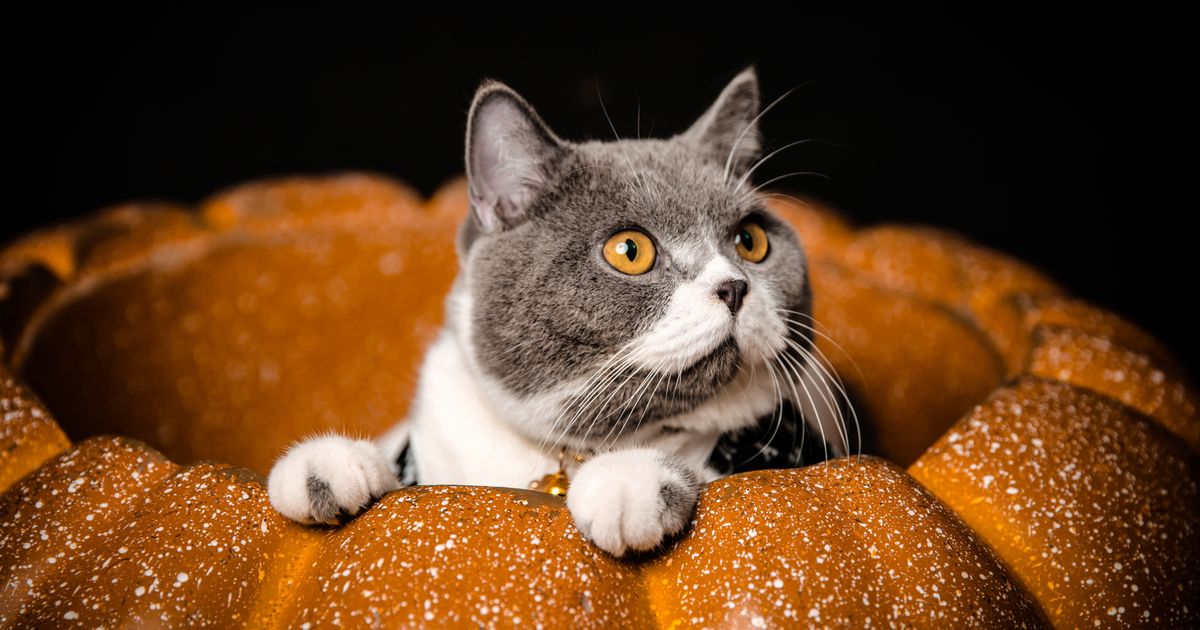
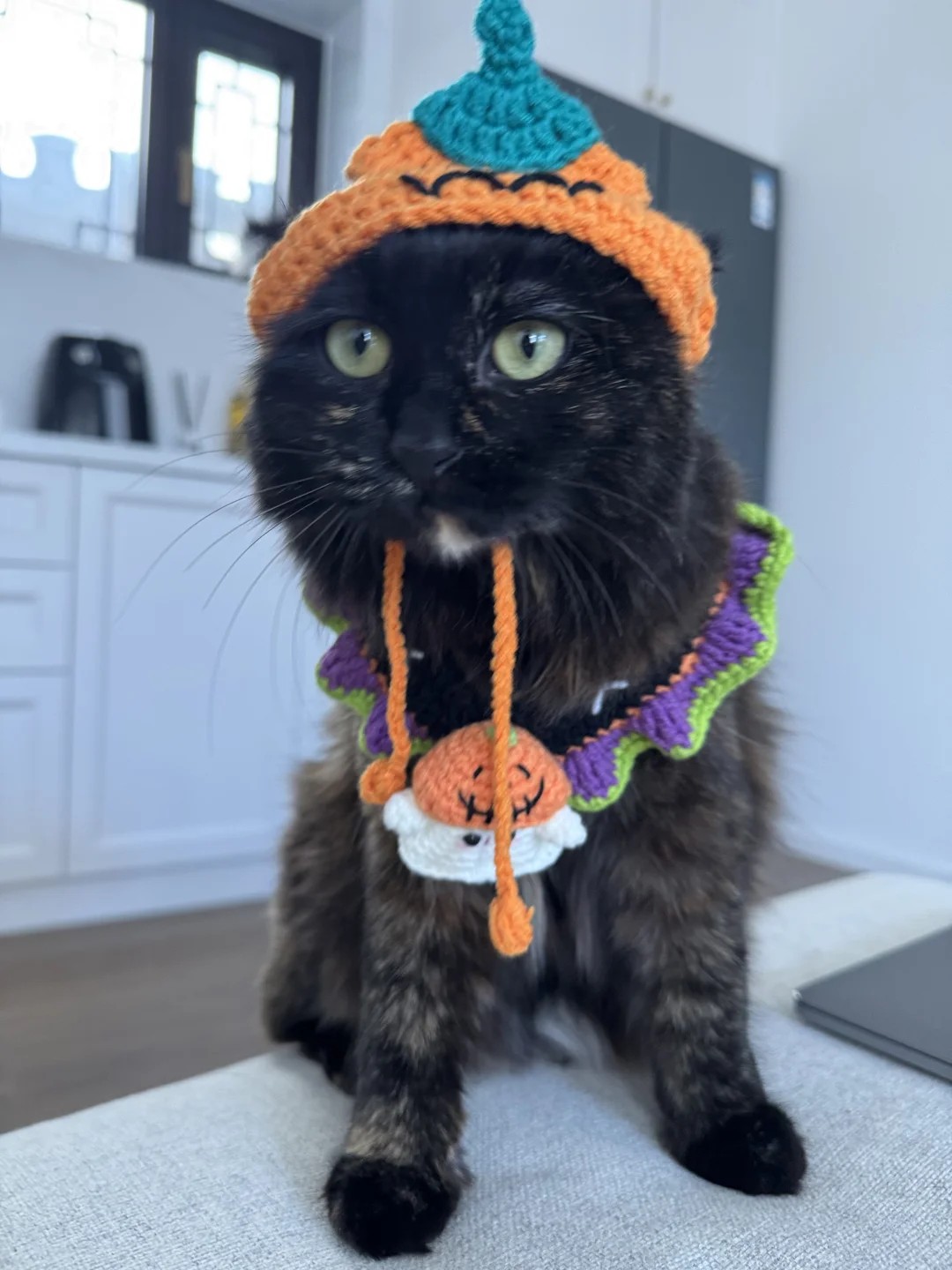
When it comes to Halloween cat safety, I learned the hard way that even the calmest cat can panic. Sam is my senior cat, a picky eater, calm for eleven months of the year. Then October arrives, the doorbell starts singing every twenty minutes, costumed children shout on the porch, and Sam becomes a disappearing act. Last Halloween he squeezed behind the dryer, refused food for a day, and stared at me with enormous pupils like I had personally invited the chaos.
If your cat does the same, take a breath. Hiding is not misbehavior. It is your cat’s survival instinct doing its job. Halloween is a festival of everything a cat fears: strangers, loud noises, sudden movements, and weird smells. The goal is not to force your cat to enjoy it. The goal is to keep her safe and calm while the madness happens around her.
Here is the complete playbook, built from real owner stories and what actually worked for our crew.
Halloween Cat Safety: Why Cats React So Strongly
Cats are creatures of territory and routine. Their safety map is built on familiar smells, familiar rooms, and familiar faces. Halloween rips up the map: strangers track new scents through the house, the doorbell triggers a noise flood, and the person-shaped figures in costumes read as “unknown giant creature” to a cat brain that cannot parse the disguise.
The physical stress response is unmistakable once you know it: pupils dilate, ears flatten backward, muscles tense, breathing quickens. A stressed cat may go stiff-legged, refuse food, hide for hours, or even urinate in a corner. These are not “dramatic” behaviors. They are genuine panic responses. And the worst thing you can do is respond to panic with force.
Mistake Number One: Grabbing the Hiding Cat
When Sam bolted under the bed, my first instinct was to reach in and scoop him out so I could “comfort” him. That is the wrong move. A cat in panic mode is computing escape routes, and a giant hand descending into her hiding spot reads as an attack. Grabbing, chasing, and staring at the hideout all make fear worse.
The rule: when a cat hides, leave her alone. Sit nearby, do your normal quiet activities, and let her choose when to emerge. If guests are over, tell them to ignore the cat completely. Curiosity has a better chance of winning when nobody is pushing.

Set Up a Safe Room Before the Doorbell Starts
The single most effective thing you can do is prepare a quiet room before Halloween night. A bedroom or bathroom with the door closed, the litter box inside, fresh water, a cardboard box hideout, and maybe a scratching pad gives your cat a bunker away from the noise.
Put Sam in the safe room before trick-or-treating begins, not after he is already panicking. Once he is already spooked, moving him feels like an ambush. Setup details that matter:
- Close the curtains so flashing porch lights do not create a strobe effect
- Add a white-noise source or calm music to mask the doorbell
- Leave a worn t-shirt with your smell in the box
- Do not open the door to “check on him” every ten minutes; quiet means quiet
Rebuilding Confidence in a Scared Spot
If your cat has a specific spot where something scared her, like the hallway where a heavy bag fell, you can rebuild her confidence with play. Sit in that spot yourself, on the floor, and dangle a wand toy nearby. Let her approach on her terms. When she bats at the toy a few inches from the scary zone, that spot starts to mean “fun place where my person sits” instead of “place where a monster dropped from the sky.”
Do this gently, over days, not hours. A naturally bold cat might recover in about a week. A genuinely shy cat can need two weeks to a month. There is no prize for rushing. There is a big prize for patience: your cat will eventually walk past the spot without flinching.
Feed the Positive Association
Food is the fastest way to rewire an emotional response. When your cat is hiding, leave a small portion of freeze-dried treats or a lickable treat near the hideout, then walk away. Let her discover that the scary room is also the snack room. Over time, “people nearby” becomes “people with snacks” instead of “people with chaos.”
During the actual party or trick-or-treat hours, skip the food pressure entirely. A stressed cat often refuses food for a few hours, and that is normal. Offer, do not force. If refusal stretches past a day, that is a vet conversation.
Tools That Help: Calming Aids Done Right
Calming products are the difference between “endures Halloween” and “almost enjoys it” for some cats. Start them early, at least a week before the big night, because none of them work instantly.
A pheromone diffuser plugged into the safe room before the season starts is the most passive option. It releases synthetic cat-appeasing signals that tell a cat “this place is safe,” with no training or dosing required.
cat calming pheromone diffuser on Amazon
For edible support, calming treats with soothing ingredients like tryptophan or L-theanine are easy to give an hour before doorbell season begins.
A calming collar can also help for cats who hate the vet-style wrap, although individual reactions vary. cat calming collar on Amazon
If you are building a full kit, my list of calming products that helped my hiding cat covers the options I actually tested, including what to skip.
The Guest Protocol
Halloween means strangers, and strangers mean new smells and noise. A few ground rules protect everyone:
- Do not let guests seek out the cat, no matter how much they love cats
- Ask kids to stay out of the cat’s room entirely
- Keep the safe room door closed even if someone wants to peek at “the cute kitty”
- After the party, let the cat come out on her own schedule, not the guests’
A stressed cat can also lash out if cornered by a stranger. Preventing the corner is part of safety, not just comfort. Your guests’ feelings matter less than your cat’s teeth staying in her face.
Know the Warning Signs
Most Halloween stress resolves on its own within a day or two. Some signs need a vet: hiding continuously for more than a day or two, refusing all food, rapid breathing, or hiding while refusing to eat even when alone. Also keep an eye on litter box accidents during recovery; stress-related accidents happen and usually fade as the cat settles.

Home-Proofing Beyond the Cat
While you prep the cat, prep the house too. Decorations that look harmless to us are hazards to cats: swinging fake cobwebs can entangle, candles invite burns, and candy bowls are a poisoning risk. Chocolate is toxic to cats, and the higher the cocoa content, the smaller the dangerous dose. Keep all candy behind closed doors and out of reach. For the full room-by-room sweep, my cat-proofing guide has the checklist I use every season.
The Night Of, Simplified
Here is the whole plan on one index card:
- Safe room prepped a week early, pheromone diffuser plugged in
- Calming treats given an hour before the doorbell marathon
- Cat in the safe room before the first knock, curtains closed, sound masking on
- No grabbing, no staring, no chasing; let hiding be hiding
- Treats near the hideout to build positive links
- Guests told to ignore the cat completely
- Watch for the red flags; call the vet if refusal lasts more than a day
Sam made it through last Halloween without a single lost meal after we ran this playbook. He still vanished for the first two hours, sure. But by midnight he was out on the sofa, eating treats, and giving me the slow blink of forgiveness. That is the version of Halloween I want for every nervous cat: a festival they can sleep through, not survive in terror.
If you have a new cat joining the family around this season, introductions deserve extra patience during the noise. This guide on introducing a new cat to your resident cat pairs well with a quiet room setup. A calm cat is a safe cat, and a safe cat makes Halloween fun for everyone.
Disclaimer
Prices and availability are accurate as of the publication date and may change. Please check the product page for current pricing.
This post may contain affiliate links. If you buy through these links, I may earn a commission at no extra cost to you. I only recommend products I’ve actually used with my own cats.
Love cats? Get more tips like this
Join our newsletter for practical cat care guides, honest product roundups, and new posts delivered straight to your inbox. No spam — unsubscribe anytime.