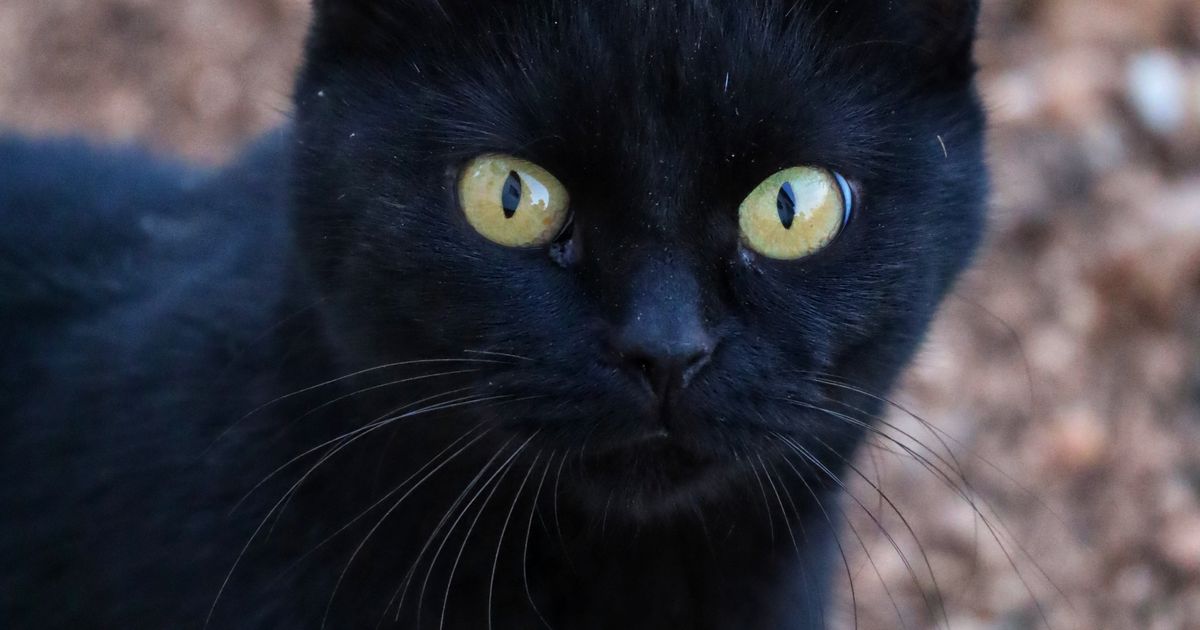
Black cats and Halloween are linked in folklore, but the real story is about safety. Every year, superstitions and holiday chaos put black cats at extra risk. Here is the truth behind the myths, plus practical ways to keep your black cat safe and happy all season long.
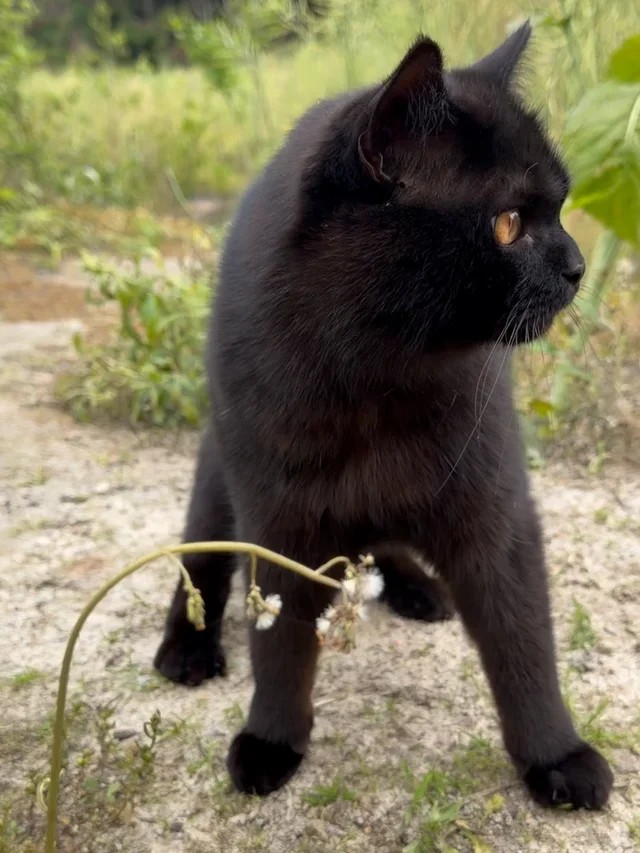
I adopted Sam in late September, which meant his first Halloween came less than a month after he moved in. Sam is a black cat: eight pounds of sleek midnight fur, gold eyes, and a purr that could power a small appliance. He’s also, statistically speaking, one of the most vulnerable cats on the planet on October 31st.
I didn’t fully understand that until I started reading. Black cats face two completely different problems on Halloween: the old, unfair superstition that makes some people nervous or cruel, and the very real practical danger that a dark-colored cat is nearly invisible at night. That second one nearly bit us in the butt on October 30th last year, and it turned me into the most over-prepared black cat owner you’ll ever meet.
Here’s what I learned about keeping a black cat safe and sound through Halloween — including the myth-busting you should know, the gear that genuinely helped, and the one mistake I hope you never make.
The Superstition Problem Is Real (and Harmful)
Let me start with the thing that made me angry when I adopted Sam: black cats are still treated like bad luck in parts of the world, and that nonsense has real consequences. Shelters report that black cats are adopted at lower rates and surrendered at higher rates than cats of other colors. October, when people get weird about anything spooky, can be especially rough.
Here’s the truth I want every person reading this to know: the “black cat = bad luck” idea has zero scientific basis. It traces back to medieval Europe, where cats got tangled up in witch hunts and superstition during a deeply frightened era. In ancient Egypt, black cats were sacred — the goddess Bastet was often depicted as a black cat. In Japan, black cats are associated with good fortune and warding off evil. In Scotland and parts of England, a black cat crossing your path is considered lucky. The same cat, the same color, completely different meanings depending on where you stand. That’s not a sign of mystical power — it’s geography.
Sam, for the record, is a very lucky cat. He found a home, he has a full food bowl, and he rules a sunbeam on the living room floor like it’s a throne. The only thing black about him is the fur.
The Real Danger: Your Black Cat Is Invisible at Night
Superstition is harmful in the long run, but the immediate, practical danger on Halloween night is simpler: a black cat outside, after dark, is almost impossible to see. This is not a metaphor. I tested it. I walked across the yard holding a black sock at arm’s length, and I could barely track it against the shadows.
Here’s what that means for Halloween:
- Door-dash risk is higher. Trick-or-treaters, open doors, and a curious cat equals a recipe for a midnight escape. If Sam bolts and hides in the yard, I literally cannot see him until I’m two feet away.
- Rescue is harder. If a black cat gets out and hides in shadows, under porches, or behind shrubs, finding them is a nightmare. Their eyes help, but only if you’re looking from the right angle.
- Drivers are a hazard. A black cat crossing a dark street is the worst-case visibility scenario. Even careful drivers can miss a moving shadow.
The solution isn’t to keep black cats inside forever and never open the door — it’s to give them extra visibility and a safety net. Here’s my setup, and it’s non-negotiable during October.
The Safety Setup That Kept Sam Safe
1. A Breakaway Collar With ID (Always, But Especially in October)
Sam wears a breakaway collar 24/7. A breakaway collar is designed to snap open if it snags on something, which prevents strangulation if a cat gets caught on a branch or fence. This is a safety feature, not a style choice — a cheap non-breakaway collar can trap a panicked cat, and I’ve read too many horror stories about cats getting their collar caught and hurting themselves trying to escape.
On the collar, he wears an ID tag with my phone number. That’s the single most useful thing for a lost cat: a human who finds your cat can call you directly. The tag is quiet enough that he can’t sneak up on birds, which, honestly, is a feature in a household with three cats who have Opinions about hunting.
2. A Light or Reflective Element
Here’s where Halloween-specific gear genuinely helps. I add one visibility item to Sam’s collar during the dark months:
- A small LED collar light. This was the game-changer. A soft, rechargeable LED collar light makes Sam visible from across the yard and, more importantly, from a car’s headlights. It clips onto his collar and has a breakaway-safe design. The LED cat collar lights we use are lightweight, which matters — a collar that’s too heavy will annoy your cat into plotting against you.
- A reflective collar as backup. Even when the LED is charging, a reflective cat collar catches headlights and flashlight beams. Sam’s reflective collar doubles as his daytime ID collar, so he’s never without some level of visibility.
3. A GPS Tracker (The Insurance You Hope You Never Need)
The collar and light help you see your cat. The GPS tracker helps you find your cat — even if someone else can’t see them. I resisted this for months because it felt like overkill. Then I read that a huge percentage of lost indoor cats are recovered only because someone found them quickly, and that every hour of searching matters.
We now have a lightweight GPS tracker on Sam’s collar during high-risk periods. It lets me pull up his location on my phone if he ever slips out. The one we use is a no-monthly-fee model — you pay once and it uses local cell networks — because I refuse to fund a subscription on top of cat food. It’s a GPS tracker for cats with a collar attachment that’s sized for an 8-pound cat, which was important: Sam isn’t a big cat, and a tracker that’s too bulky will slow him down and make him miserable.

My Black Cat Halloween Safety Rules
Here’s the full checklist I follow every October 31st, and honestly, every dark evening in general:
- Keep him indoors. The safest black cat on Halloween is the one inside. Sam is a strictly indoor cat anyway, and Halloween is when I double-check windows, doors, and the balcony door. No “just a quick sniff of the porch” — it takes one second for a spooked cat to bolt.
- Designate a door-watcher. When we have friends over, someone’s job is always “watch the cats near the door.” It sounds silly until the doorbell rings, everyone moves at once, and a small black blur slips between ankles.
- Set up a safe room. Sam’s safe space is the bedroom with his favorite blanket, food, water, and litter box. On Halloween night, I keep that door closed and the room quiet. If he wants to hide from the doorbell circus, he has a place to go.
- No candles near cat height. Pumpkin candles, tealights, and the like are hazards for every cat, but a black cat who blends into shadows is extra easy to trip over or bump into. We use LED lights exclusively around the house during spooky season.
- Photo ID and vet info ready. In the worst case, I have recent photos of Sam, his microchip number, and the nearest 24-hour vet on speed dial. This is the boring paperwork that saves lives.
If you’re bringing home any new cat this season, black or not, don’t skip the basics — my new cat checklist covers the first-week setup that makes a cat feel secure enough to stay put.
Debunking the Myths (So You Can Be a Black Cat Advocate)
One of the best things you can do for black cats this Halloween is talk about them like they’re the wonderful animals they are. Here are the facts I share whenever someone says something superstitious:
- Black cats aren’t a breed. Black is a coat color found across many breeds and mixed-breed cats alike. Sam is a shorthair mutt of impeccable quality.
- Black cats can “change color” in the sun. Many black cats get reddish or brownish tints in their fur after lots of sun exposure. It’s a normal oxidation effect, not a curse.
- Black cats have beautiful eyes. Gold, green, amber — the contrast of a black coat makes their eyes pop, which is why they photograph so well against light backgrounds. Give me a black cat over a white cat for portraits any day.
- They’re lucky cats. In Chinese tradition, black cats (“xuán māo”) were historically seen as guardians against misfortune. In Japanese folklore, a black cat brings good luck to single women. The only unlucky thing about black cats is the bad reputation they didn’t earn.
FAQ: Black Cat Safety on Halloween
Should I keep my black cat indoors on Halloween?
Yes. Indoor is the safest choice for any cat on Halloween, but especially for black cats, who are harder to spot if they escape. If your cat absolutely needs outdoor time, make it brief, supervised, and during daylight.
Do I really need a breakaway collar?
If your cat wears a collar, it should be breakaway. A non-breakaway collar can catch on branches, fences, or furniture and cause strangulation or serious injury. It’s not optional gear for an outdoor-adjacent cat — it’s the minimum.
Is a GPS tracker worth it for an indoor cat?
It depends on your risk tolerance and your cat’s personality. If your cat is a door-dasher or lives in a household with frequent comings and goings, a tracker is cheap insurance. We use ours during high-risk periods rather than year-round, which balances cost and peace of mind.
Are black cats really in more danger on Halloween?
In practical terms, yes — because they’re harder to see at night, which raises their risk in the dark, busy, door-opening chaos of Halloween. The superstition angle also leads to lower adoption rates and occasional cruelty, which is why shelters may restrict black cat adoptions around Halloween. That’s a protective measure, not a “bad luck” one.
How can I help black cats beyond my own home?
Share accurate information about black cats, support shelters that adopt them out responsibly, and if you’re ever in the market for a cat, consider the black one in the back of the cage. You’ll be getting a companion who just happens to be unfairly overlooked.
The Bottom Line
Sam made it through his first Halloween safe, warm, and indoors — and the look on his face when the doorbell stopped ringing was pure “what was that all about?” A breakaway collar, an ID tag, a little light, a GPS backup, and a closed safe-room door turned spooky night into just another Tuesday for the sleekest cat in the house.
Black cats aren’t bad luck. They’re just easy to overlook in the dark. This Halloween, let’s make sure the cats who need it most are the easiest to find.
Disclaimer
Prices and availability are accurate as of the publication date and may change. Please check the product page for current pricing.
This post may contain affiliate links. If you buy through these links, I may earn a commission at no extra cost to you. I only recommend products I’ve actually used with my own cats.
Love cats? Get more tips like this
Join our newsletter for practical cat care guides, honest product roundups, and new posts delivered straight to your inbox. No spam — unsubscribe anytime.