
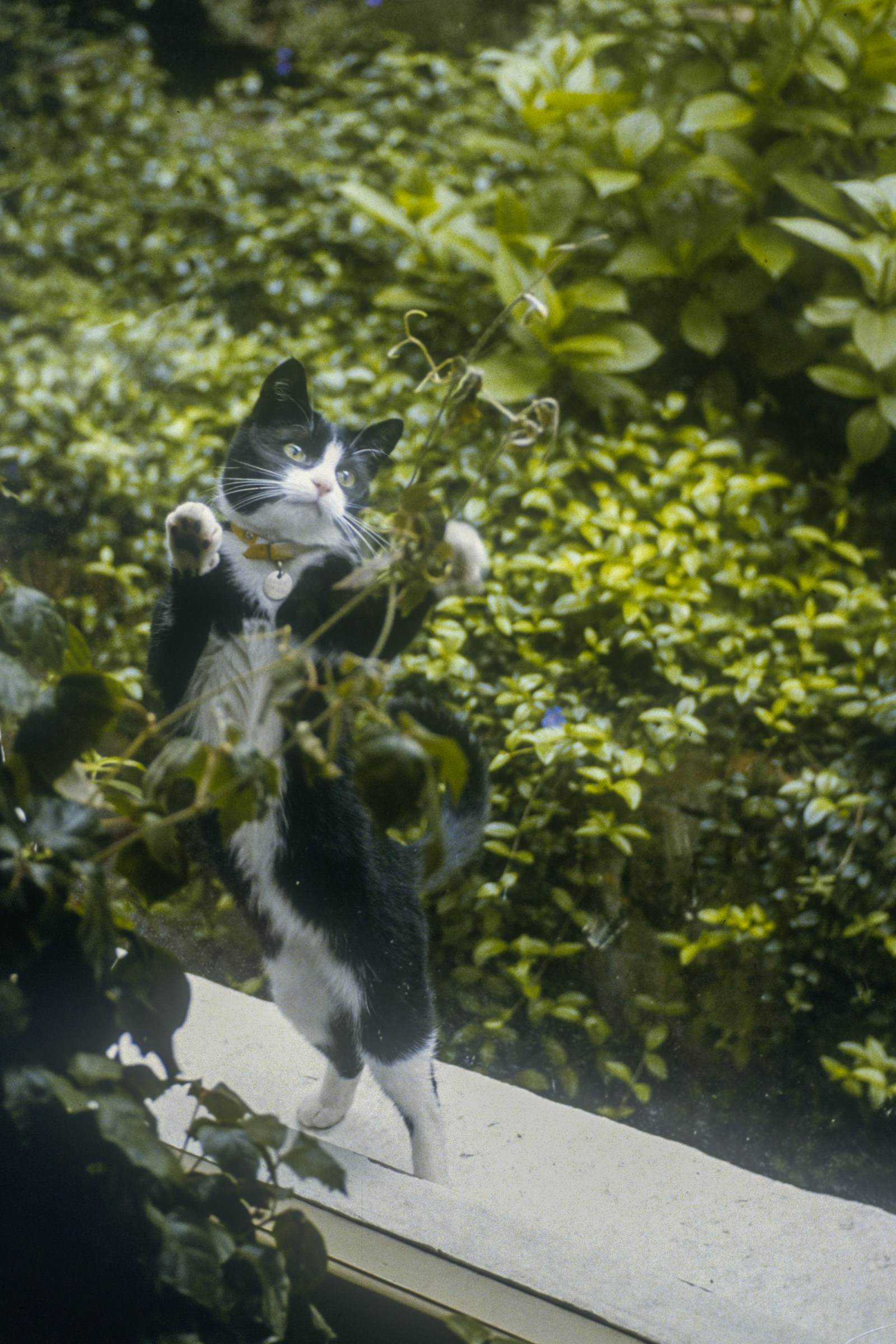
Catnip and Halloween enrichment ideas are a great way to keep indoor cats happy and entertained during the spooky season. Every year, I see the same Halloween scene in cat owner groups: someone buys an adorable catnip-stuffed pumpkin, their cat goes absolutely bonkers for two days, and then the toy sits untouched for the rest of the season. “My cat doesn’t like catnip anymore,” they say. No — the catnip got stale.
I’ve been through this cycle more times than I can count. But when I finally learned how catnip actually works — the freshness math, the 30% of cats who don’t react, the difference between a sniff and a full catnip experience — Halloween became one of the best enrichment seasons of the year for our crew. Miso turns into a little pumpkin-fighting warrior, Tofu gets his rare moments of zoomie joy, and even Sam (who mostly judges) has his favorite spot on the cat tree.
Here’s how to make catnip work for your cat this Halloween, with the DIY toys that actually last and the enrichment tricks that keep a party-night cat calm.
How Catnip Actually Works (the 5-15 Minute Window)
First, the science, because understanding it changed how I use it. Catnip contains a compound called nepetalactone, which binds to receptors in a cat’s nose and triggers a temporary state of excitement and euphoria. Not every cat reacts — roughly 50–70% of cats do, and kittens under six months usually don’t respond at all. Tofu is one of the non-reactors, which I used to find sad until I learned that silver vine works for many of those cats (it’s a great backup to have in the house).
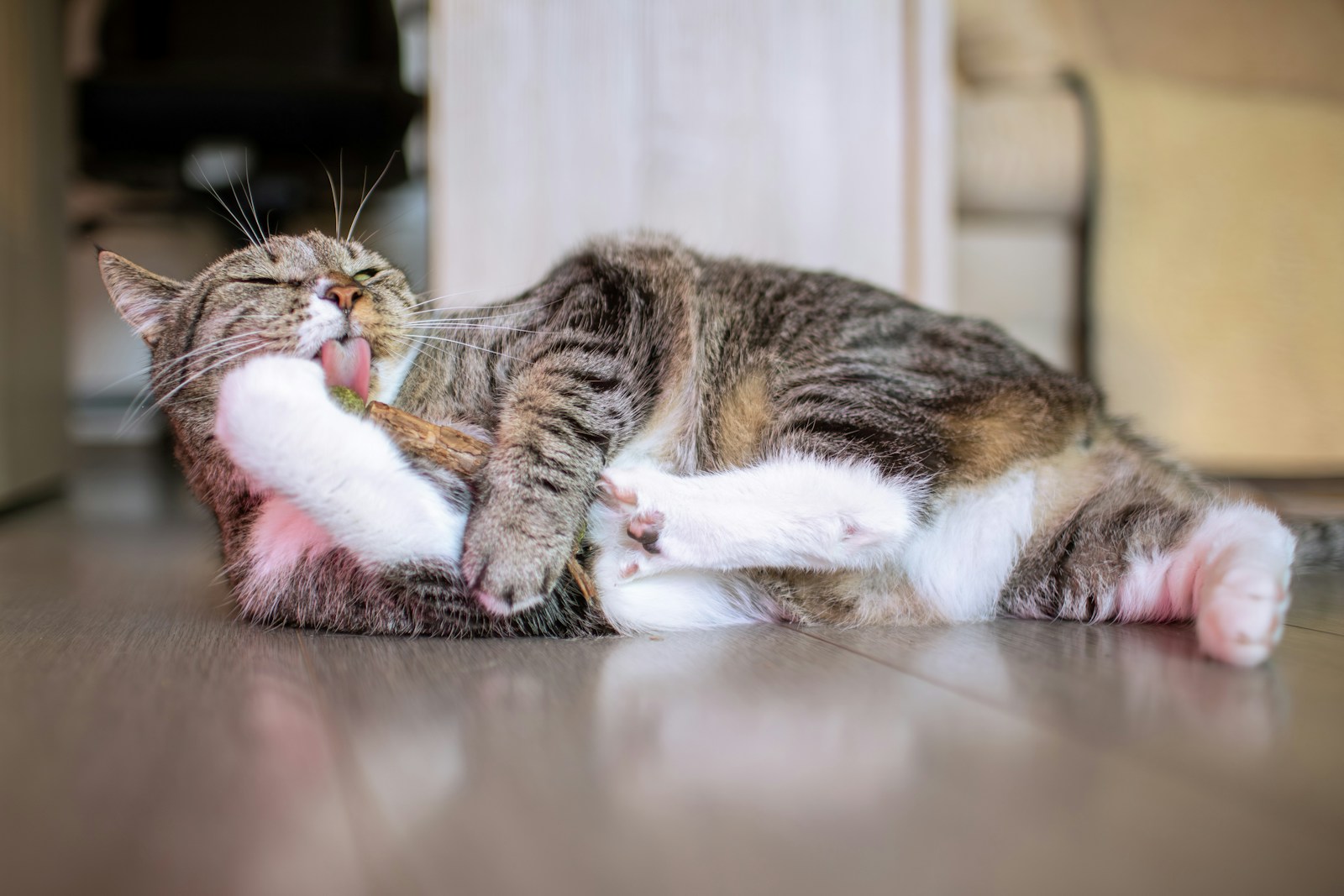
When a cat does react, here’s the timeline: sniffing, rubbing, rolling, drooling, chirping — roughly 5 to 15 minutes of intense play, followed by a calm, relaxed phase as the effects wear off. Then the cat’s nose needs a break. You can’t just re-expose them to the same scent and get the same fireworks; the effect needs time to reset, usually a few hours at minimum.
This is the key insight: catnip isn’t a drug you dose daily — it’s an enrichment tool you use strategically. I use it the way a good coach uses a treat: at the right moment, for the right job.
Why Catnip Is Perfect for Halloween
Halloween creates a very specific problem for indoor cats: lots of noise, strangers, and doorbell chaos. That’s stress fuel. And while a stressed cat needs a quiet space (I cover that in depth in our calming products guide), they also need positive, engaging alternatives to the scary stuff happening outside.
That’s where catnip shines:
- It’s a distraction. Ten minutes of intense catnip play before the doorbell marathon starts means the cat’s energy is spent on fun, not fear.
- It’s a positive association. If Halloween night becomes “the night I get the good catnip toy,” the cat starts to look forward to the event instead of dreading it.
- It’s self-directed enrichment. Once the catnip hits, your cat entertains themselves. That’s gold when your hands are busy handing out candy.
The trick is timing. I give the cats their catnip session before the chaos peaks, not during it. If I wait until Miso is already hiding under the couch from a doorbell ring, he won’t touch the toy. Catnip is a proactive tool, not a rescue.
DIY Halloween Catnip Toys (That Last Longer Than 2 Days)
The store-bought Halloween catnip toys are cute, but they suffer from one fatal flaw: the catnip inside goes stale fast. Once the scent fades, the toy is dead weight. Here’s my fix — DIY toys where I control the catnip freshness.
The basic recipe:
1. Cut two identical shapes from felt or cotton fabric. Halloween shapes are easy: a pumpkin, a ghost, a bat, a simple star.
2. Sew them together, leaving a small opening.
3. Stuff with dried catnip (plus a little polyfill or a crinkle paper scrap for texture if you want).
4. Sew the opening closed.
5. Test the catnip is potent: fresh dried catnip should have a strong, herbaceous smell when you squeeze the toy.
The genius part of making your own? You can refresh them. When the toy goes quiet after a few weeks, snip a tiny hole, add a pinch of fresh catnip, and sew it back up. It’s born again. Store-bought toys with glued seams can’t do that.
For our house, I use loose dried catnip leaves for the refill — a bag lasts me a full season with three cats. If you don’t want to sew, a simpler version: a clean sock filled with dried catnip and tied off. It’s ugly, but Miso treats it like it’s made of gold.
My Favorite Spooky DIY: The Catnip Spider
The hit of last Halloween was a “spider” I made from a felt circle, four pipe-cleaner legs, and a generous pinch of catnip. It took me ten minutes. Miso carried it around the apartment, kicked it into submission, and fell asleep draped over it like a trophy. Sam, the dignified one, gave it a single disdainful paw-swat, which for Sam is basically a standing ovation.
DIY safety rules (non-negotiable):
– No glue, no dangling strings, no small beads for eyes. Sew eyes or skip them.
– Pipe-cleaner legs only if you’re supervising — cats can chew and swallow the wire if they get it off.
– Refresh or retire the toy when it gets raggedy.
Beyond the Toy: 5 Catnip Enrichment Ideas
The toy is just the beginning. Here’s how I use catnip for enrichment beyond stuffing it in felt:
- The cardboard box upgrade. Sprinkle a pinch of catnip in a plain cardboard box with a towel inside. Instant cat cave. Miso spent an hour in a “haunted cat box” last year, which I decorated with nothing but a drawn-on ghost face. He didn’t care. The nip did the work.
- Cat tree garnish. A pinch of catnip on the top platform of the cat tree turns a climbing session into an adventure. It encourages cats to use vertical space, which is great for confidence and exercise. Our cat tree for small apartments is a favorite launchpad for exactly this reason.
- Scratching post recharge. Sprinkling catnip on the scratching post refreshes the scent and re-attracts cats who’ve lost interest. It’s a cheap way to save a scratched couch. (See also: our scratching fix guide for the full rescue plan.)
- The puzzle feeder mashup. This is the enrichment MVP. I put a few treats and a pinch of catnip inside a puzzle feeder, and Miso has to work to get them out. The combination of scent hunting + problem solving burns way more energy than a plain toy. Our treat-dispensing puzzle toy has survived three seasons and thousands of paw-swats.
- The pre-party calm-down. As I said, use catnip before the doorbell chaos. A 10-minute catnip session at 5 PM means a calmer, more content cat at 7 PM when the first trick-or-treaters arrive.
Freshness Is Everything (the Storage Lesson)
Here’s the mistake that made me think my cats “outgrew” catnip: I kept the bag of catnip open in the pantry, and I used it for months. By November, it smelled like nothing. The cats agreed.
Catnip freshness rules I follow now:
– Store loose catnip in an airtight container, away from light and heat. A dark pantry drawer works.
– Check the sniff test every few weeks: if you can’t smell it, neither can your cat.
– Buy in smaller quantities and replace more often. A giant bargain bag that goes stale is worse than a small fresh bag.
– For toys, refresh monthly during active season.
The good news is that quality dried catnip isn’t hard to find. We keep a small pouch of potent dried catnip in the toy drawer specifically for refills, and the difference between fresh and stale is night and day. Miso’s reaction went from “polite sniff” to “full body roll, chirping, kicking, existential joy” just from switching to fresher leaves.
FAQ: Catnip and Cats
Is catnip safe for cats?
Yes. Catnip is non-toxic and not addictive. The effects are temporary — typically 5–15 minutes — and there’s no physical dependency. The main thing to watch is overindulgence (some cats get drooly or slightly dizzy), which passes on its own.
Why doesn’t my cat react to catnip?
About 30–50% of cats don’t respond to catnip at all, and kittens under six months usually don’t. It’s genetic, not a personality flaw. Try silver vine or valerian root — some non-reactors respond to those.
How often can I give my cat catnip?
A few times a week is plenty. The effect needs time to reset between sessions. Daily use can reduce the novelty, and some cats get overstimulated if it’s too frequent.
Can catnip calm a stressed cat?
It can help before stress hits, by providing positive enrichment and a pleasant alternative. But if your cat is already panicking, catnip won’t fix that — a quiet room and minimal stimulation are better. Use catnip as part of a broader calming plan.
Is it OK to make DIY catnip toys?
Yes, with care: use safe materials, no loose parts, no glue, and supervise the first play session. The advantage is you can refresh the catnip when it goes stale.
The Bottom Line
Catnip is the easiest, cheapest enrichment win in the cat-owner playbook, and Halloween is the perfect season to use it. Fresh catnip, a few DIY toys, a puzzle feeder, and a strategic “catnip before the party” routine turned our chaotic October nights into something the cats actually look forward to.
The best part? It costs almost nothing. A bag of leaves, a sock, a cardboard box, and ten minutes of crafting is all it takes to give your cat the spookiest, happiest Halloween in the house. And if your cat’s like Miso, they’ll carry that catnip spider around for weeks like a tiny trophy — which is exactly what Halloween enrichment should look like.
Disclaimer
Prices and availability are accurate as of the publication date and may change. Please check the product page for current pricing.
This post may contain affiliate links. If you buy through these links, I may earn a commission at no extra cost to you. I only recommend products I’ve actually used with my own cats.
Love cats? Get more tips like this
Join our newsletter for practical cat care guides, honest product roundups, and new posts delivered straight to your inbox. No spam — unsubscribe anytime.