How to Tell If Your Cat Is Overweight (and a Realistic Weight-Loss Plan)

I’m going to confess something about Miso. My orange tabby, the love of my life, was fat. Not “fluffy” fat, not “big-boned” fat — he was a 16-pound loaf with a waddle, and I didn’t realize it until a vet looked at him during a routine visit and said, very kindly, “So, we should talk about his weight.” I felt like a parent being told their kid is failing gym class.
The thing about cats is that they don’t gain weight overnight. It sneaks up on them the way it sneaks up on us: one extra scoop of kibble here, one “treat because he’s cute” there, a winter where nobody feels like playing. Before you know it, your cat can’t groom their own back and jumps onto the couch like a landing airliner. The good news is that with a few honest checks and a boring, consistent plan, most cats can lose weight safely. Here’s how to tell if yours needs to, and how to do it without starving anyone.
Knowing how to tell if your cat is overweight starts with the body condition score, not the scale.
How to Tell If Your Cat Is Overweight: The 30-Second Body Score
You don’t need a scale or a chart to get a first impression. Two simple hands-on checks tell you most of what you need to know:
- Can you easily feel the ribs? Run your palms along your cat’s sides, like you’re checking for a wallet in a jacket. You should feel ribs with a light touch, like the back of your hand feels over your knuckles. If you have to press hard to find them, your cat is carrying extra weight.
- Is there a waist? Look down at your cat from above. There should be a gentle tuck between the ribs and the hips. A cat that looks like a tube or a potato from above is likely overweight.
Vets use a 1-to-9 body condition score to be more precise, and you can learn the system well enough to track changes at home. A cat in the ideal middle range has a visible but subtle waist, ribs you can feel without digging, and no sagging belly fat pad. As the score climbs, the ribs disappear, the belly starts to swing when they walk, and the whole silhouette gets rounder.
Why “Fluffy” Is Not a Body Type
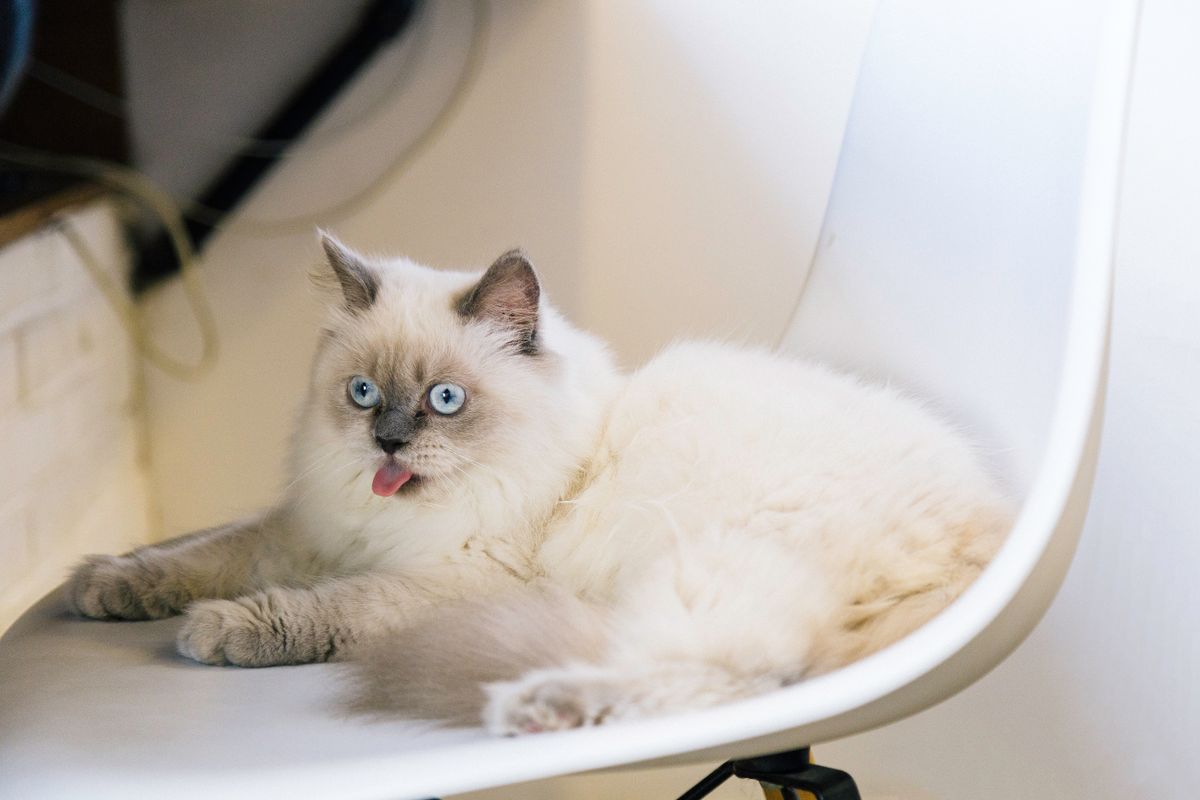
If there’s one phrase I hear from fellow cat owners constantly, it’s “but he’s just fluffy!” I’ve said it myself. Long-haired cats can hide a truly alarming amount of body underneath all that coat. Miso isn’t even that fluffy, and I still managed to be shocked when the scale confirmed what the mirror had been saying for months.
Here’s the uncomfortable truth: fur is not a body condition score. You have to actually touch the cat to know what’s underneath. The rib check and the waist check work exactly the same on a long-haired cat — you just have to get your hands past the coat. If you can’t feel ribs through the fluff, the fluff isn’t the problem.
I also started looking for the quieter signs: does your cat groom less than they used to? Struggle to reach their own lower back? Get winded after five minutes of play? Lose interest in jumping onto things they used to hop up without thinking? Those are all quality-of-life clues that the weight is affecting them, long before the vet has to say anything.
How Many Calories Does Your Cat Actually Need?
Here’s where most well-meaning weight-loss attempts go off the rails: people guess. And cat food labels don’t exactly make it easy — they give ranges for “adult cats” that could feed a Maine Coon or a teacup kitten.
The honest answer is that the right calorie number depends on your cat’s weight, body condition, and activity level, and the safest plan is one your vet calculates for you. What I can tell you from experience is that portion size is almost always the problem. When I actually measured Miso’s food instead of eyeballing it, I was horrified to find I’d been feeding him a solid 20-30% more than he needed, every single day. Small overfeeding adds up fast.
A reasonable approach that many vets suggest is a gradual reduction rather than an overnight crash: feed slightly less than the cat’s current maintenance amount, then adjust based on the weekly scale trend. Some vets recommend a rotating plan that cycles between a reduced amount and a maintenance amount over weeks — the key is that it’s structured, measured, and tracked, not “let’s see what happens.”
This is not a substitute for veterinary advice. Before starting any weight-loss plan, have your vet calculate a target weight and calorie range for your cat. Crash dieting cats is dangerous — rapid weight loss in cats can trigger a serious liver condition called hepatic lipidosis.
The Feeding Plan That Doesn’t Starve Them
The biggest fear most owners have — and I share it — is that a weight-loss plan means a miserable, hungry cat. It shouldn’t. A good plan reduces calories without leaving your cat desperate at the food bowl all day.
What worked for Miso, with my vet’s guidance:
- Measured meals, not free feeding. The bowl stopped being an all-day buffet. He now gets measured portions at set times, and I put the bag away so nobody (read: Miso) gets an accidental refill.
- Canned food helps. Wet food has more volume and moisture per calorie than dry kibble, so a cat can feel fuller on fewer calories. My vet was a big fan of switching Miso’s main meals to canned weight-control food. Blue Buffalo True Solutions Weight Control wet food (B0GHCZ4JFN) became his staple — portioned per the can, and he still acts like every meal is a five-star event.
- Treats got a budget. This was my hardest one. Treats are where I was sabotaging all the progress. Now the treat budget is real: a tiny number of calories a day, and only for actual events (training, pill time, a genuinely heroic loaf). No more “treat because he made eye contact.”
- No snacks for stress. I used to reward Miso with food after nail trims, after vet visits, after he let me sleep an extra hour. All of that had to go, or at least shrink to nearly nothing.
The plan took a while, but Miso wasn’t starving — he was eating measured meals, just not endless ones. The difference between a hungry cat and a well-fed cat on a plan is that the second one stops acting desperate after a couple of weeks.
Puzzle Feeders and Slow Feeding
Miso doesn’t just eat too much; he eats too fast. He’d inhale his portion in ninety seconds and then scream at me like I’d never fed him in his life. The single best tool I found was making him work for his food.
A puzzle feeder (B07W9KDJ5B) — basically a little maze dish where the cat has to paw, nudge, and dig for kibble or treats — changed everything. It stretches mealtime from ninety seconds to ten or fifteen minutes, engages the brain instead of just the stomach, and genuinely seems to satisfy something deeper than calories. It’s the same idea as the toys in my interactive cat toys guide: a busy cat is a happier cat, and a cat who works for dinner doesn’t have the same desperate relationship with the bowl.
If you don’t want to buy anything, you can start today: split the daily portion into two or three smaller meals, scatter a few kibbles around the floor for “foraging,” or hide treats in a cardboard box with some crumpled paper. It doesn’t need to be fancy to work.
Weigh-Ins, Photos, and Vet Checkpoints
You cannot manage what you don’t measure. For a cat, “he looks a little slimmer, maybe” is not data. “He weighed 15.8 pounds last week and 15.6 this week” is data.
I bought a digital pet scale (B098TVJKZ3) and weighed Miso at the same time every week — same day, same time, before breakfast. He tolerates it the way he tolerates everything: with maximum drama, briefly. The wiggle-proof surface helps, and the scale is accurate enough to catch the small weekly changes that matter.
Track these numbers in a note on your phone, and take a photo from above once a month. The photos are humbling — changes are slow — but they show progress the scale can’t, like a waist slowly reappearing.
A safe, sustainable rate of weight loss for a cat is slow: roughly half a percent to two percent of body weight per week. Faster than that is a red flag, not a victory. My vet also wanted check-ins every few weeks during the plan, partly to adjust calories and partly to make sure nothing else was going on. Don’t skip those.
When Weight Gain Is a Medical Red Flag
Not every weight problem is about too much kibble. Sometimes the body is doing something else, and a diet plan is the wrong treatment.
Get a vet involved if you notice:
- Rapid, unexplained weight gain or loss. Weight that changes fast, without a change in food, is a medical signal, not a diet failure.
- Increased thirst and urination. This combo is a classic warning sign for conditions like diabetes, which is more common in overweight cats.
- A ravenous appetite despite weight loss. Eating more but weighing less is the opposite of a portion-control problem.
- Limping or reluctance to jump. Extra weight puts real stress on joints, and joint pain can also make a cat less active, which makes the weight worse. A cat who was fine jumping yesterday and now hesitates deserves a vet visit, not a diet lecture.
- A senior cat losing muscle. Weight loss in older cats isn’t automatically good — losing muscle mass is different from losing fat, and it can point to kidney, thyroid, or dental issues.
If any of these show up, put the diet spreadsheet away and call the vet. Weight management matters most when it’s part of the whole picture of a cat’s health, not a number-chasing project. For a sense of what day-to-day cat ownership really costs — food, litter, vet visits, and yes, the occasional emergency — my breakdown of how much a cat costs per month is a useful reality check, and if you’re looking to swap foods, my best wet cat foods guide is a good starting point.
FAQ: Cat Weight Loss
Q: How can I tell if my cat is overweight without a vet?
A: Start with the two checks: can you feel the ribs with a light touch, and is there a visible waist from above? If both fail, your cat is likely carrying extra weight. A vet can confirm with a body condition score.
Q: How fast should a cat lose weight?
A: Slowly. Roughly 0.5% to 2% of body weight per week is a safe, sustainable range. Much faster is dangerous — rapid weight loss in cats can trigger hepatic lipidosis.
Q: Should I just feed my cat less food?
A: Feed measured portions, but don’t guess at the amount. Have your vet calculate a target weight and calorie range. Crash-dieting a cat is genuinely dangerous.
Q: Is dry or wet food better for weight loss?
A: Many vets prefer wet food for weight management because it has more moisture and volume per calorie, helping cats feel fuller. But the total calorie count is what matters most, regardless of format.
Q: My cat begs for food all the time. How do I handle it?
A: Feed measured meals on a schedule, use a puzzle feeder to stretch mealtime, and stick to a strict treat budget. Begging usually fades once the cat learns that the bowl isn’t an unlimited resource.
Q: When should I worry that weight loss isn’t working?
A: If your cat is losing weight too fast, gaining weight despite a measured plan, showing increased thirst and urination, or losing weight while eating more, call your vet. Those are medical flags, not diet problems.
The Bottom Line
Figuring out that Miso was overweight was uncomfortable, and fixing it took longer than I wanted and more discipline than I expected. But a year later, he’s a healthier, more active cat who grooms himself properly, jumps like a normal cat, and still manages to look deeply offended at every measured meal. The formula that worked was embarrassingly simple: honest hands-on checks, a vet-calculated calorie plan, measured meals, canned food, a puzzle feeder, and weekly weigh-ins. You don’t need to be a nutritionist to help your cat lose weight. You need to be consistent, and you need to love them enough to say no to the fourth snack.
Disclaimer
This article contains affiliate links. If you purchase through these links, we may earn a commission at no additional cost to you. As an Amazon Associate, I earn from qualifying purchases. The information in this article is for general informational purposes only and is not a substitute for professional veterinary advice, diagnosis, or treatment. Always consult your veterinarian before starting a weight-loss plan for your cat, and seek immediate veterinary care if you notice rapid weight change, increased thirst and urination, or signs of pain.
How to tell if your cat is overweight starts with ribs, not the scale.
How to tell if your cat is overweight includes the waist check.
How to tell if your cat is overweight also uses the belly tuck test.
How to tell if your cat is overweight matters at every age.
How to tell if your cat is overweight leads to a vet-approved plan.
Vets use body score first when explaining how to tell if your cat is overweight.
Photos help you learn how to tell if your cat is overweight.
How to tell if your cat is overweight gets easier with monthly notes.
Ask your vet how to tell if your cat is overweight at checkups.
How to tell if your cat is overweight is not the same as being heavy-boned.
Love cats? Get more tips like this
Join our newsletter for practical cat care guides, honest product roundups, and new posts delivered straight to your inbox. No spam — unsubscribe anytime.