Disclosure: This post contains affiliate links. If you buy through them, we may earn a commission at no extra cost to you. As an Amazon Associate I earn from qualifying purchases.
The thing about training a cat is that you need a reward worth cooperating for. My cat Tofu will do almost anything for the right treat — he’ll sit, he’ll target-touch my hand, he’ll even tolerate being picked up for a few seconds. But the wrong treat? He looks at it, looks at me, and walks away mid-training-session like I’ve wasted his time.
That’s why I became a freeze-dried treat person. Not because they’re trendy. Because they work.
Why freeze-dried treats are the training gold standard
Freeze-dried treats are exactly what they sound like: raw meat that’s had the moisture removed through freezing and vacuum processing. No cooking, no additives, no fillers. Just concentrated meat, which means:
- They’re high-value. Cats are obligate carnivores — real meat is the most motivating reward there is.
- They’re small and crumbly. You can break one into tiny pieces, which matters because training needs many repetitions, and you don’t want to overfeed.
- They smell amazing (to a cat). The smell is concentrated, which grabs attention immediately.
- They’re single-ingredient. You can check the label and know exactly what you’re feeding.
The only rule that matters: rehydrate or break small
Two things I wish someone had told me before I started:
Always rehydrate freeze-dried treats before feeding — soak them in warm water for a few minutes. Freeze-dried food absorbs water in the stomach, and feeding a cat a pile of dry freeze-dried treats can cause stomach upset or, in rare cases, choking. The rehydration makes it safe and also more palatable.
Break them into training-size pieces. A full freeze-dried chunk is often too big for a training reward. I break mine into pea-sized bits, sometimes smaller for a kitten. You’ll get more repetitions per bag and your cat won’t get full halfway through the session.
How to introduce freeze-dried treats safely
Before you hand over a bag of freeze-dried chicken, there are a few safety rules I wish someone had laid out for me in big letters.
Start with one protein. Cats can develop sensitivities to novel proteins, and if you feed chicken, salmon, and beef liver all in the same week, you won’t know which one caused the upset stomach. I learned this the boring way: by making my foster kitten’s tummy grouchy for three days and having zero idea which treat did it. Now each new protein gets a two-week trial period before I add another one to the rotation.
Watch the water bowl. Freeze-dried treats are dehydrated, which means they’re pulling moisture from your cat’s system to be digested. My vet’s rule: if your cat is eating more than a few freeze-dried treats a day, they need access to fresh water at all times, and ideally you’re rehydrating the treats anyway. Cats are already terrible at drinking enough; don’t make it worse.
Check the label for more than the first ingredient. A single-ingredient label is the gold standard, but some “freeze-dried” products sneak in vegetable glycerin, preservatives, or flavorings to keep costs down. If the ingredient list is longer than one item, I put it back. My cats are too small for me to gamble on mystery additives.
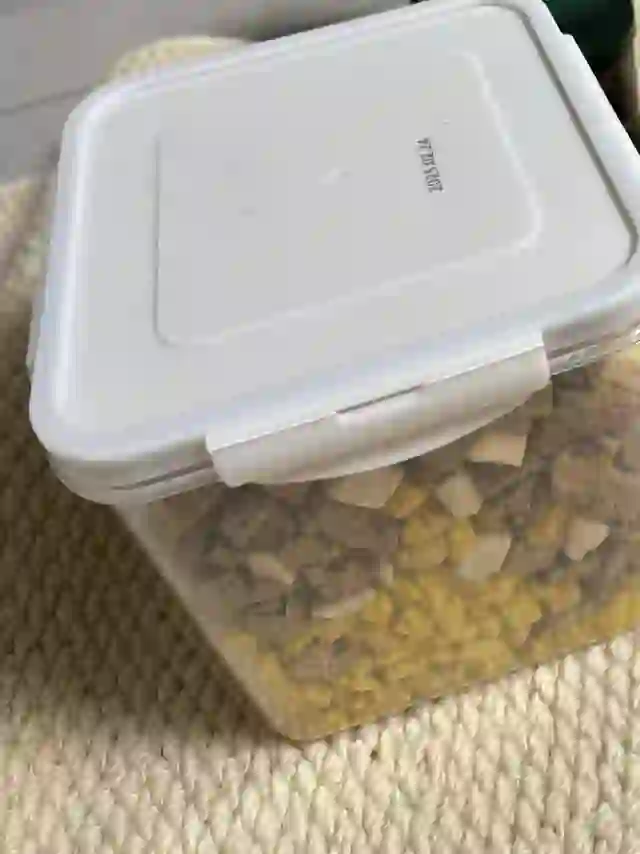
Store them like they’re expensive — because they are. Freeze-dried treats go stale and, worse, can absorb humidity and turn chewy or even moldy. I keep mine in a small airtight jar with a silica packet, out of sunlight, and I never buy a giant bag unless I know I’ll use it within a month. A stale treat is a rejected treat, and a rejected treat teaches your cat that training sessions aren’t worth their time.
Introduce slowly with sensitive cats. If your cat has a history of vomiting, diarrhea, or itchy skin, give a single tiny crumb first and wait 24 hours. One crumb is not a meal; it’s a test. The same logic applies to kittens under six months, whose digestive systems are still figuring out solid food.
And one more rule that applies to every cat: freeze-dried treats are not a meal replacement. I’ve seen people get so excited about the “raw meat” quality that they start substituting treats for dinner. That’s backwards. The treats are for training and enrichment — the calories they add should be subtracted from the daily food budget, not stacked on top of it. During a serious training week, I count treats in grams. It sounds obsessive, but a cat who’s gaining weight mid-training is a cat whose treats need to shrink.
PureBites: the safest, simplest option
Price: around $12-20 per bag.
PureBites is the brand I trust most for single-ingredient purity. The chicken and the beef versions are literally just freeze-dried meat — one ingredient on the label. Nothing else. No preservatives, no flavorings, no “natural flavors” that might hide anything.
My cats go nuts for the chicken. I’ve used it for training, for hiding pills (a critical life skill), and for emergency “please come out from under the bed” negotiations.
Downsides: the bags are pricey for the volume, and the pieces are big-ish, so you’ll be breaking them up. Also, they’re fragile — the bag can arrive as a bag of crumbs if it gets squished in shipping. Crumbs still work as training treats, honestly.
Stewart: the value option
Price: around $8-15 per bag.
Stewart makes freeze-dried treats that are similar in concept to PureBites but friendlier to the wallet. The chicken is a bit softer in texture, which some cats prefer, and the bags are bigger for the price.
The trade-off: the pieces are more variable in size, and the “produced in a facility that processes…” warnings are longer, which suggests more cross-contact risk if your cat has allergies. For most cats, it’s a totally fine option.
I’ve used Stewart as my daily training treat and saved PureBites for the high-stakes moments. That split has worked well.
Instinct: the one with the toppers
Price: around $10-20 per bag.
Instinct makes both freeze-dried treats and meal toppers — the toppers are meant to be crumbled over regular food to make it more appealing. That’s a genuinely useful second function: if your cat is a picky eater, a freeze-dried crumble over their wet food can turn a “sniff and walk away” into a clean bowl.
The treats themselves are good — chicken, salmon, and beef liver options — and the liver version is ridiculously high-value for training. My cat will do backflips (not literally, but spiritually) for the beef liver.
Downsides: the salmon and liver versions have a stronger smell that not everyone loves, and they’re slightly pricier per ounce than Stewart.
The comparison
| PureBites | Stewart | Instinct | |
|---|---|---|---|
| Price per bag | $12-20 | $8-15 | $10-20 |
| Ingredients | Single-ingredient | Mostly single | Single + toppers |
| Texture | Dense, needs breaking | Softer | Varied |
| Best for | Pills, high-value moments | Daily training | Picky eaters + toppers |
Freeze-dried beyond training: pills, picky eaters, and cats of every age
Once you have freeze-dried treats in the house, you’ll discover they have more uses than training. Let me walk you through the ones that actually stuck for me.
Pill hiding, the right way. The classic move is to hollow out a freeze-dried chunk and wedge the pill inside. It works for the first few days, and then some cats get suspicious. My cat Tofu now eats the treat, finds the pill, and spits it out with the precision of a sommelier identifying a cork. The upgrade: crush the freeze-dried treat into a fine powder, mix it with a little warm water into a paste, and wrap the pill in the paste. It dissolves the pill’s flavor into the meat, and most cats swallow it before they realize they’ve been had. Ask your vet first whether the medication can be crushed — some pills are time-release or coated and must not be broken.
The meal-topper trick for picky eaters. If your cat sniffs dinner and walks away, a crumble of freeze-dried chicken over the wet food changes the conversation. The smell is what gets them to the bowl; the wet food underneath does the actual nutritional work. I use this sparingly — if I use it every meal, the cat learns to wait for the crumble — but it’s a legitimate rescue tool for sick days, post-vet visits, and the stubborn phases kittens go through.
Kitten versus senior cats. Kittens do great with tiny, well-rehydrated pieces — their teeth are small and their tummies are new to meat. Senior cats, especially ones with dental issues or reduced appetite, benefit from freeze-dried treats soaked into a soft mush; it’s a high-protein, high-smell food that’s easy to eat. My old cat Sam, who lost interest in dry kibble at fifteen, will still eat a rehydrated freeze-dried chicken mash. It’s not a meal replacement, but it keeps calories going in when he needs them most.
Multi-cat households, be careful. If you have more than one cat, high-value treats are a conflict magnet. I feed training treats one cat at a time, in separate rooms, and I never leave a bowl of freeze-dried treats out for free-grazing. The treat should come from you — that’s what makes it valuable — and it should never become a resource to fight over.
The emergencies. Freeze-dried treats are also the best “come here now” tool I own. They’ve saved me from a cat bolting out the front door, from a cat hiding under the bed during a thunderstorm, and from a cat who needed to go in the carrier for a vet trip and had other plans. One whiff of the chicken bag and the carrier becomes the most interesting place in the house. Keep a small stash near the door and near the carrier. You’ll use it eventually, and you’ll be glad it’s there.
How I actually use them
Training treats work best as part of a system. Here’s mine:
- Daily training (sit, target, recall): Stewart, broken into tiny pieces.
- High-stakes (pill hiding, claw trims, vet visits): PureBites beef or chicken, used sparingly.
- Picky eating rescue: Instinct topper crumbled over wet food.
One warning: freeze-dried treats are potent. A little goes a long way, and they’re calorically dense relative to their size. Track the treats you give against your cat’s daily food, or you’ll end up with a chubby cat who’s “too full” for dinner.
Also, if you’re using treats to teach new behaviors, pair them with a interactive toy session afterward — the play reinforces the training loop and burns off the treat energy. Training a cat is a lot easier when they’re slightly tired and very motivated.
Freeze-dried treats by cat type: which ones suit your cat
Not every freeze-dried treat suits every cat, and matching the treat to the cat saves you money and frustration. Here’s the breakdown I use when people ask me which to buy.
For the picky eater: single-ingredient, strong-smelling proteins. Chicken, salmon, and minnows are the top three by success rate in my house. Picky cats are usually driven by smell, and freeze-dried’s concentrated aroma is exactly what breaks a food strike. Buy the smallest bag first — a picky cat can change their mind about a protein after a week, and a half-eaten big bag of salmon is a sad purchase.
For the training-driven cat: small, soft, easy-to-break treats. Training needs many tiny rewards without blowing the calorie budget. PureBites and Whole Life treats both crumble into pea-sized pieces easily, which means one treat can be stretched into ten training reps. If your cat is food-obsessed, the smaller the pieces, the longer the training session lasts.
For the senior cat: single-protein, easy-to-chew options. Older cats often have dental issues, so hard bone-shaped treats can be a struggle. Minnows, chicken breast pieces, and anything that crumbles under light pressure are the senior-friendly picks. My senior cat Sam, who had teeth extracted in his teens, eats freeze-dried chicken like it’s going out of style — the texture works where crunchy kibble doesn’t.
For the cat with allergies: single-ingredient formulas and careful label reading. A freeze-dried chicken treat is useless if your cat is allergic to chicken. The beauty of single-ingredient treats is that you can run a clean elimination test: feed one protein, watch for reactions, try another. Just read every label — some “single-ingredient” treats sneak in additional proteins or flavorings, which defeats the whole point.
For the overweight cat: portion discipline, not prohibition. Treats are treats; the calorie math still applies. The key is breaking treats into small pieces and accounting for them. A freeze-dried minnow is small enough to be a reasonable treat; a freeze-dried chicken breast is a meal and should be treated as such.
And the honest rule that covers all cats: introduce any new protein slowly, a quarter-piece at a time, and watch for stomach upset. Even the best treat is a bad day if it gives your cat the runs.
The bottom line
Freeze-dried treats are the closest thing to a universal key for cat training. Start with PureBites for safety, add Stewart for value, and keep an Instinct topper in the cupboard for picky-eating emergencies. Rehydrate, break small, and count the calories.
And remember: a cat who refuses every treat you’ve ever bought isn’t broken. He’s just waiting for the freeze-dried chicken to hit the market. Now it has.
Prices and availability are accurate as of the publication date and may change. Please check the product page for current pricing.
Reminder: This post contains affiliate links. See our full disclosure here.
Love cats? Get more tips like this
Join our newsletter for practical cat care guides, honest product roundups, and new posts delivered straight to your inbox. No spam — unsubscribe anytime.
1 thought on “Best Freeze-Dried Cat Treats for Training”