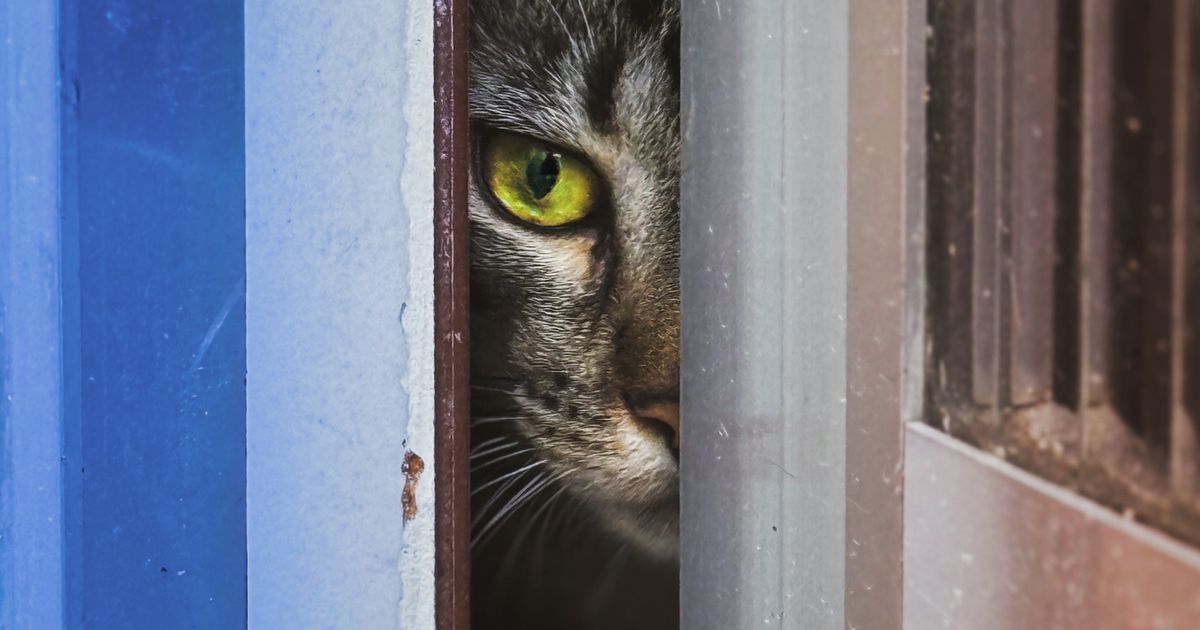
Why do cats bolt out the door on Halloween? If you share your home with a feline escape artist, you already know the answer can be terrifyingly fast. Every October, the combination of open doors, costumes, and candy runs creates the perfect storm for a cat to bolt out the door on Halloween night. Here is what happens and how to keep your cat safe.
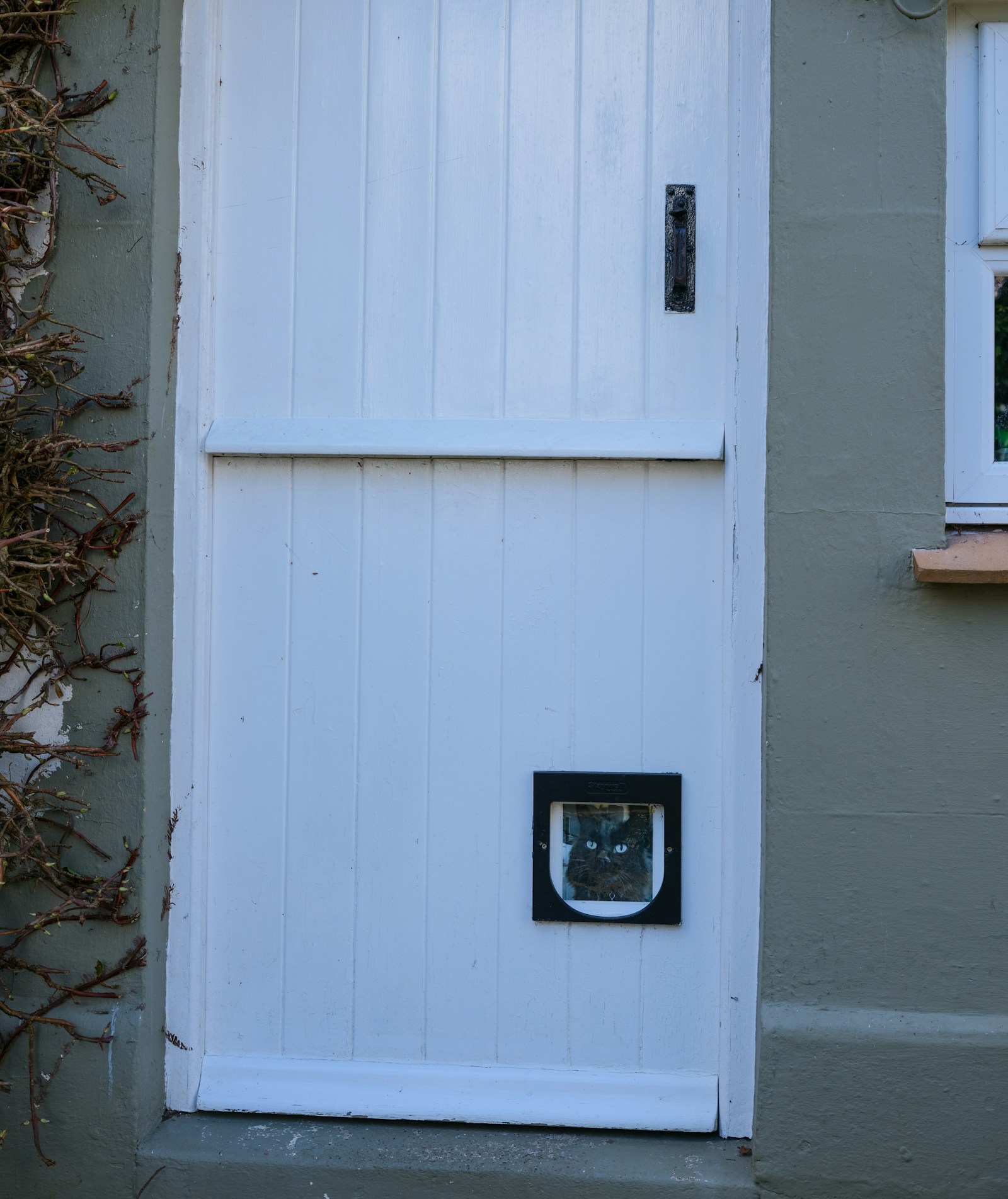
I have never moved faster in my life than the moment Miso decided the Halloween candy run was his big chance.
It was 6:30 PM on October 31st. The first trick-or-treaters were two minutes out, and I’d opened the front door to check the porch light. Miso — who had been casually napping by the shoe rack — turned into a furry missile the instant the door cracked. He slipped through my legs, cleared the step, and vanished into the bushes by the walkway before I could even finish saying his name.
He came back fifteen minutes later, tail up, looking extremely pleased with himself, and absolutely refused to explain where he’d been. I, meanwhile, had aged three years in fifteen minutes.
Door-bolting is one of the most common — and most preventable — cat behaviors, and Halloween is its peak season. Doorbell chaos means more door openings than any other night of the year, and a curious cat sees every open door as an invitation to the great unknown. Here’s what I learned from Miso’s escape: why cats do it, how to stop it, and exactly what to do if your cat slips out anyway.
Why Cats Bolt (It’s Not Because They’re “Bad”)
Let me start with the part that made me feel better: door-bolting isn’t disobedience. It’s instinct. Here’s what’s going on in a cat’s head when the door opens:
- Curiosity. The space beyond the door is a cocktail of new smells — neighbors, other animals, garbage, grass, mystery. For a curious cat like Miso, that’s the most interesting thing in the world.
- Boredom. Indoor cats get the same four walls every day. The outdoors is the ultimate enrichment, and a door opening is a golden ticket.
- Habit. If bolting has “worked” before — if your cat got out, had an adventure, and came back safe — it becomes a learned game. Miso’s successful escape was one of the worst things that could have happened for his behavior, because now he knows the door leads somewhere interesting.
- Hormones. An unneutered cat is far more likely to dart out looking for a mate. If your cat isn’t fixed, that’s the first box to check.
The statistics back this up: a huge percentage of lost indoor cats escape when the door opens while their owners are home. It’s not the cat who’s careless — it’s the door.
Prevention: The Door-Dash Routine That Actually Works
After the Halloween escape, I built a door routine that’s reduced our dash attempts by about 95%. Here’s the system:
1. The Open-Door Safety Checklist
Before any door opens, I run through this in my head:
- Where are the cats? Ideally, not in the entry zone. If they’re near the door, I either close them in another room or keep them distracted.
- What am I carrying? If my hands are full of candy, groceries, or a screaming child, the door opens slowly and closes fast. I stage everything at the door before opening it.
- Who’s the door-watcher? When guests are coming over, one person is assigned “watch the cats near the door.” It’s not glamorous, but it works.
2. The Small-Crack Technique
When I absolutely must open the door with cats nearby, I use the small-crack method: open just enough to slide through, sidestep in or out, and close immediately. No grand doorway moments. If a cat is blocking the threshold, I wait — the door stays closed until the cat wanders off. A cat that’s sitting right at the door is a cat who’s about to become a projectile.
3. The Distraction Throw
This is Miso’s kryptonite. Before opening the door, I toss a favorite toy or a treat into the apartment — not at the cat, just into the room. Miso’s brain short-circuits: does he chase the toy, or does he try the door? Nine times out of ten, the toy wins, because food and prey motion are stronger motivators than curiosity. When he’s mid-chase, I open the door, move through, and close it. By the time he remembers the door exists, it’s shut.
4. The “Coming Home = Food” Rewire
Here’s the deeper fix. For months, Miso’s pattern was: door opens → human comes home → attention. So the door itself became a signal for “something good happens now,” which made him want to be near it. I rewired that.
Now the routine is: come home, don’t greet the cats at the door. Walk to the kitchen, put down my stuff, go to the cat tree or their food spot — then greet and feed. The cats now associate “human walks away from the door” with “good things happen,” not “door + human = excitement.” It’s subtle, but it’s real, and it’s one of the best behavior changes we’ve made. If you want the full playbook on training indoor cats, my interactive cat toys guide has the enrichment side of this equation too.
5. Halloween-Specific Hardening
On October 31st specifically, I do extra:
- A door buffer. I put a small screen, a shoe rack, or a baby gate just inside the entry. It doesn’t block a determined cat, but it breaks their sightline to the open door and slows a dash.
- A door stopper or wedge. A door wedge keeps the door from swinging wide when I’m juggling candy. The narrower the gap, the less the cat can squeeze through.
- The cats get their own room. The bedroom suite with food, water, litter, and toys. The doorbell circus happens on the other side of a closed door. This isn’t just for their safety — it’s for their stress levels too.
The Recovery Plan: If Your Cat Does Bolt
Even with prevention, cats are cats, and doors get opened. If your cat gets out, here’s what to do — and this is the plan that brought Miso home in fifteen minutes.
1. Don’t Chase (Seriously)
The worst thing you can do is sprint after a bolting cat. Chasing triggers the chase-response: the cat sees a predator on their tail and runs farther, faster, deeper. Miso’s escape worked because he found a bush to hide in near the door — and I found him faster by staying calm and calling him in a normal voice than I would have by diving after him.
2. Use the “Calm Call” and Favorite Sound
Stand still, get low, and call your cat’s name in a calm, happy voice. If they have a food or treat sound they respond to (Miso comes running for the sound of the treat jar), use that. Cats are more likely to return to a familiar, non-threatening presence than to be captured by a frantic human.
3. Open the Door and Wait
For a cat who bolted but didn’t go far, the single best move is often: go inside, open the door, and wait quietly. Miso came back to the open door because it was the door he knew, the smells were familiar, and nothing was chasing him. Leaving the door open a crack — with you nearby, not hovering — gives them a guilt-free path home.
4. Search Methodically If They Don’t Return
If the calm call doesn’t work in 15–20 minutes, search methodically:
- Check under and behind things near the door first: bushes, porches, cars, under decks. Indoor cats rarely run far; they hide.
- Search at dawn and dusk — that’s when cats are most active and most likely to move.
- Bring food, a familiar blanket, and their favorite toy.
- Tell your neighbors and post to local lost-pet groups with a clear photo and your contact info.
5. The Safety Net: ID Collar + GPS
This is the part that turns a terrifying hour into a manageable one. Every cat who’s even a little bit door-curious should have:
- A breakaway collar with an ID tag. If someone finds your cat, a phone number on the tag is the fastest route home. Our engraved ID tags are on every cat, with a second contact number added during Halloween week.
- A GPS tracker for the high-risk ones. I resisted this until Miso’s escape. Now he wears a lightweight cat GPS tracker during high-risk periods. If he ever bolts again, I can pull up his location on my phone instead of wandering the neighborhood calling his name. It’s peace of mind I wish I’d had before the Halloween scare. My full GPS tracker roundup compares the options I tested — some have monthly fees, some don’t, and “which one fits your cat’s weight” matters more than you’d think.
And microchip: if your cat is found by a shelter or vet, the microchip is their ID card. It’s a one-time vet procedure and it’s the single best permanent safety net.

What NOT to Do When Your Cat Bolts
I’ve made every mistake in this category, so here’s the anti-list:
- Don’t punish the cat after they come home. Your cat doesn’t connect “I bolted” with “human is angry now.” All they learn is that the human is scary when they return — which makes them less likely to come back next time. Welcome them home like it’s a party.
- Don’t turn the front door into a battleground. If every door opening becomes a wrestling match with the cat, the cat gets more excited, not less. The goal is to make door-openings boring and unremarkable.
- Don’t assume “he’ll come back” if hours pass. Indoor cats in unfamiliar territory can get disoriented fast. If your cat hasn’t returned within a few hours, escalate the search — signs, neighbors, shelters, online groups.
FAQ: Cats Bolting Out the Door
Why does my cat bolt out the door even though they’re happy indoors?
Curiosity and instinct. The outdoors is a rich sensory world, and a door opening is an opportunity. Boredom and habit make it worse — that’s why enrichment and a consistent door routine are the real fixes.
What should I do the second my cat escapes?
Don’t chase. Get low, call calmly, use their food or treat sound, and open the door to give them a route home. Search methodically near the door if they don’t return in 15–20 minutes.
Will a GPS tracker work if my cat hides under a porch?
It helps — most trackers use cellular or GPS networks that work outdoors. They can show you the general area even if the cat is hidden. Indoor-only coverage varies, so check the tracker’s specs and range before relying on it.
Should I keep my cat away from the front door entirely?
Not necessarily — that’s hard to maintain and can make the door even more intriguing. Instead, make door-openings boring: distract before opening, close quickly, and never reward door-hovering behavior.
My cat came back after bolting. Should I do anything?
Check them for injuries, especially paws and mouth. Make sure they eat, drink, and use the litter box normally. And review your prevention setup — the goal is that they never need another adventure.
The Bottom Line
Miso’s Halloween escape ended safely, but it was a wake-up call that changed our whole door strategy. The combination of a boring-door routine, a distraction throw, an ID collar, and a GPS tracker means the next time someone rings the bell on Halloween, the cats are safe behind a closed door, and I’m handing out candy without a racing heart.
Cats bolt because they’re curious and the door is interesting. Your job isn’t to make them less curious — it’s to make the door less interesting, and to have a plan for the day curiosity wins anyway.
Disclaimer
Prices and availability are accurate as of the publication date and may change. Please check the product page for current pricing.
This post may contain affiliate links. If you buy through these links, I may earn a commission at no extra cost to you. I only recommend products I’ve actually used with my own cats.
Love cats? Get more tips like this
Join our newsletter for practical cat care guides, honest product roundups, and new posts delivered straight to your inbox. No spam — unsubscribe anytime.