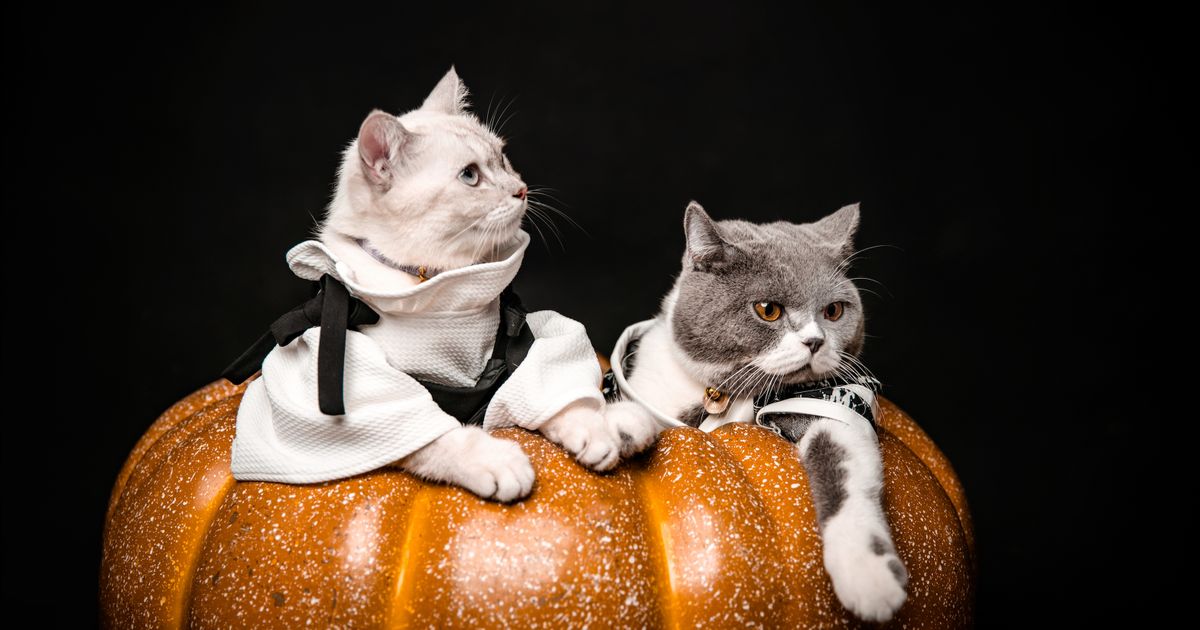
Throwing a Halloween party with cats is doable — here is how I learned to do it right. I love Halloween parties. I also love my cats. For three years, I tried to love both at the same time in the same room, and it went badly more than once. The first year, Sam spent the entire party wedged behind the couch, and I found a puddle of stress pee near the laundry room the next morning. The second year, I made the mistake of pulling him out to “show him off” to a guest who “just loves cats.” He hissed, scratched me, and gave the party the kind of review that would get any venue one star.
The third year, I finally got it right. I hosted the same party with the same loud friends, and Sam spent the night in his own private suite — a quiet bedroom with his favorite blanket, food, water, and litter box — emerging at midnight to reclaim the living room like he owned it. Which, to be fair, he does.
Here’s my complete plan for hosting a Halloween party when you have cats. It’s built from my own mistakes and the stress-science of feline behavior, and it works.
The First Rule: Your Cat Doesn’t Want to Be at Your Party
Let me say this plainly: most cats do not enjoy parties. Not the music, not the doorbell, not the twelve strangers who want to pet them, not the witch costume that suddenly turns their favorite human into a giant crinkly stranger.
Cats are territorial, routine-loving animals with hearing roughly six times more sensitive than ours. A party is a sensory assault: new smells, loud voices, sudden laughter, doors opening and closing, boots stomping. For a cat like Sam, who’s naturally cautious, this is not a fun social event — it’s a threat event. His brain says “danger everywhere,” and he responds the only way a cat knows how: hide, or if he can’t hide, escalate.
The kindest thing you can do for your cat is not to make them attend the party. It’s to give them a better party to attend — their own. I call it the Cat’s Private Suite, and it’s the centerpiece of my hosting plan.
The Cat’s Private Suite: Set It Up Before the Party
A safe room is a room where your cat can fully decompress: quiet, dim, and completely theirs. It’s the single most effective thing I’ve done for party nights, and it’s simple to set up.
What goes in the suite:
– Food and fresh water, placed away from the litter box (cats don’t like their dining room next to their bathroom).
– A litter box, freshly scooped.
– A comfortable bed, blanket, or a cardboard box with a soft towel — somewhere they can curl up and feel enclosed.
– A few familiar toys, especially ones with your scent on them.
– A scratching post if there’s room — stress grooming and scratching are self-soothing behaviors.
The key timing detail: introduce the suite before the party, not the day of. I set up Sam’s suite in the morning or the day before, leave the door open, and let him wander in and out on his own terms. By the time guests arrive, it’s not a scary new room — it’s his spot. If you only shut the door on him when the doorbell starts ringing, he’ll associate the room with the scary moment and may refuse to use it next time.
You can do this even with a brand-new cat — my guide to introducing a new cat has the scent-swap and slow-intro techniques that apply here too, since a new cat is even more sensitive to party chaos.
During the Party: What Actually Helped
The suite is the foundation, but the party itself needs a few ground rules. Here’s what I do now, and it’s made the difference between “cat hiding in terror” and “cat vibing in another room.”
Sound Management
Cats are sound-sensitive in ways humans forget. Loud music, popping balloons, and sudden screams from a ghost story are all stressors. I do three things:
- Keep the party away from the cat zone. The suite is on the opposite side of the apartment, and I keep the door closed. Music stays on the party side.
- Add white noise or soft music in the cat zone. A small white-noise machine or a fan near the suite masks the party sounds. It doesn’t have to be loud — just enough to blur the sharp edges.
- No surprise noisemakers. I banned party poppers and anything that makes a sudden loud snap. One pop can spike a nervous cat’s stress for hours.
Guest Rules (Print Them If You Have To)
Before guests arrive, I tell everyone: “The cats are not joining us tonight. Please don’t go looking for them, don’t open the suite door, and don’t bring treats for them.” I say it casually, but I mean it.
Why? Because even well-meaning guests are a stress source. A guest who opens the suite door “just to say hi” defeats the entire purpose. A guest who finds Sam hiding behind the couch and tries to coax him out teaches Sam that hiding isn’t safe. The single most respectful thing guests can do is ignore the cats completely.
The No-Force Rule
If your cat does wander into the party — some confident cats genuinely like to people-watch — let them come and go. Do not grab them, do not hold them up for photos, do not “force socialization.” Forcing a stressed cat to interact is how you get scratches, hisses, and worse, and it teaches the cat that parties are dangerous. Tofu, our social butterfly, sometimes strolls through the party for exactly four minutes, accepts one chin scratch from a calm guest, and leaves. Perfect. Sam never appears until everyone’s gone. Also perfect.
Stress Levels: Know When It’s Serious
Not all stress looks the same, and knowing the difference between “annoyed” and “medical emergency” is crucial. I use a simple traffic-light system:
- Green (normal party stress): Hiding, cautious, flat ears when they hear a loud noise, but still eating and using the litter box. This is manageable. The suite handles it.
- Yellow (moderate stress): Not eating, hiding for long stretches, vomiting or soft stool, spraying or peeing outside the litter box, hiding and refusing to come out even when the house is quiet. This needs your attention — check the suite setup, give it a full quiet day, and monitor closely.
- Red (severe stress): Refusing food and water for more than 24 hours, labored breathing, extreme lethargy, or a male cat unable to urinate (a blocked urethra is a life-threatening emergency). Call your vet immediately. Do not wait to see if they “snap out of it.”
The traffic-light system is a little clinical, but it’s saved me from both overreacting and underreacting. The party’s over, the cat’s fine, but maybe I check on him anyway — that’s green. The cat hasn’t eaten in 26 hours — that’s red, not “picky.”

The Gear That Made a Difference
A few products genuinely helped us through party season. I’m careful about what I recommend, but these earned their place:
- Calming pheromone spray. We use a synthetic cat pheromone spray in the suite about 30 minutes before guests arrive. It doesn’t drug the cat — it mimics the facial pheromones cats use to mark safe territory. Sam visibly relaxed with it. The cat calming pheromone spray we use goes on the blanket, not on the cat, and we reapply it before big events. For more options, my full roundup of calming products for anxious cats covers the ones that survived real-world testing.
- Ear protection for extreme cases. For a cat who’s especially noise-sensitive, there are soft, padded ear muffs designed for pets. Sam doesn’t need them, but if your cat panics at thunder, fireworks, or party volume, a pair of pet ear muffs can blunt the worst of it. Introduce them slowly with treats, never force them on a struggling cat.
- Door draft stoppers. Party nights mean the door opens a lot. A simple under-door draft stopper in the suite door both muffles sound and prevents the cat from squeezing out (or a guest from peeking in). It’s cheap, and it doubles as soundproofing.
After the Party: The Recovery Phase
The party ends, the guests leave, and the work isn’t done. Here’s my post-party routine:
- Wait for the cat to come out on his own. Don’t open the suite and drag him out. Leave the door open, go about your normal evening, and let him emerge when he’s ready. For Sam, that’s usually within an hour of the last guest leaving. For a more stressed cat, it might be the next morning.
- Check food, water, and litter. If the litter box is untouched and the food bowl is full, monitor closely. A cat who skips one meal is often fine; a cat who skips two is a vet call.
- Do a calm, low-key interaction. Once he’s out, offer a favorite treat and a slow blink. Don’t over-cuddle, don’t apologize in baby talk, just be the same calm human he knows. This reinforces that the scary night is over and normal life has resumed.
- Clean up party remnants quickly. Balloons, streamers, candy, and party favors are all potential hazards once the cat reclaims the space. I sweep the living room and remove anything a cat could chew, swallow, or get tangled in.
One thing I don’t do anymore: “compensate” with an extra big meal or a marathon cuddle session the moment I see him. That can actually increase stress if the cat isn’t ready. The best reward is a predictable, quiet routine — which for a cat is the best party gift you can give.
FAQ: Hosting a Party With Cats
Should I lock my cat in a room during a party?
If “lock” means “shut them in a prepared, comfortable suite with food, water, litter, and familiar items,” then yes — for most cats, that’s ideal. If it means “shove them in the bathroom with nothing,” no. The suite is about giving them a choice of a safe space, not punishing them.
What if my cat seems curious about the party?
Let them investigate at their own pace. Keep the suite available and the door ajar so they can retreat. Just don’t force them to stay in the middle of the action — a confident cat who wants to check things out will do it on their own terms.
My cat peed outside the litter box after a party. Should I punish them?
No. Punishment after the fact doesn’t teach cats anything except fear. Stress-related accidents are a symptom, not bad behavior. Clean the spot thoroughly with an enzyme cleaner, reduce future stress, and talk to your vet if it keeps happening.
How long should I monitor my cat after a party?
At least 24 hours. Watch for eating, drinking, litter box use, and general energy. If your cat is still hiding and refusing food after 24 hours of quiet, or shows any red-flag symptoms, call your vet.
The Bottom Line
Hosting a Halloween party with cats isn’t about making your cat attend — it’s about giving them a dignified way to sit it out. A prepared safe suite, sound management, clear guest rules, and a patient post-party routine turned our household from “three stressed cats and one frazzled host” into “three content cats and a party that actually got enjoyed.”
Now when the doorbell rings, Sam disappears to his suite with the confidence of a cat who knows the good room is waiting for him. And when the last guest leaves, he emerges, stretches, and looks at me like “so, how was your thing?” — which, coming from the actual owner of the apartment, is the highest compliment.
Disclaimer
Prices and availability are accurate as of the publication date and may change. Please check the product page for current pricing.
This post may contain affiliate links. If you buy through these links, I may earn a commission at no extra cost to you. I only recommend products I’ve actually used with my own cats.
Love cats? Get more tips like this
Join our newsletter for practical cat care guides, honest product roundups, and new posts delivered straight to your inbox. No spam — unsubscribe anytime.