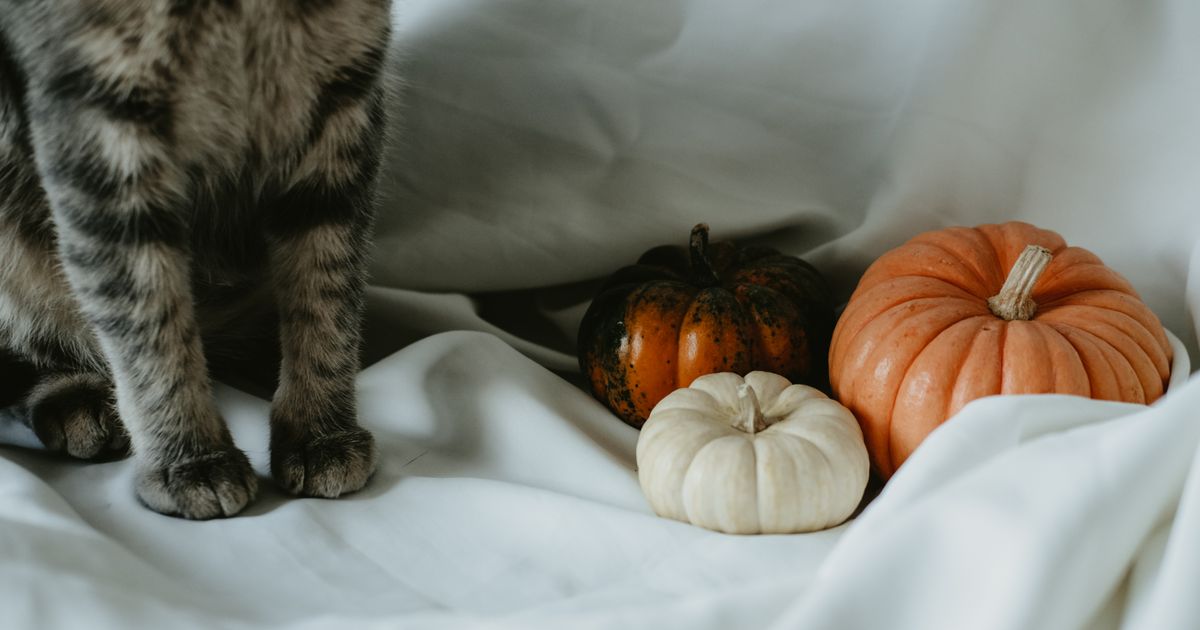

Halloween proof your home for cats room by room, and start with the room where accidents happen first. Miso, my orange tabby, has two hobbies: playing with anything that dangles and destroying anything that costs money. Last year he chewed through a phone charger, a set of earbuds, and one very expensive Ethernet cable. Then Halloween arrived, and I added candles, fake cobwebs, and a pumpkin display to a house that was already a cat obstacle course. The result was predictable chaos.
Halloween decorations are a minefield for cats, and the usual “put it up high” advice does not work when your cat is a professional climber. So I did what every frazzled cat owner eventually does: I walked through my home room by room and treated every object like a cat might attack it. This is that checklist, with the products that actually stopped the carnage.
Halloween-Proofing Your Home for Cats: The Living Room
The living room is the danger zone. It is where we hang out, where the TV lives, and where the Halloween decorations go up.
Cables first, because they are the sneakiest hazard. Chewing a cord can electrocute a cat, cause fires, and destroy your devices, and the behavior usually happens when you are not watching. The three-pronged fix that worked for us:
- Physical isolation: wrap every cable in a protective sleeve or run them through a cable tray, tucked into corners and behind furniture.
- Taste deterrent: coat the exposed lines with a bitter anti-chew spray. Cats hate the taste, and the smell is undetectable to humans after it dries.
- Redirect the chewing urge: give your cat acceptable things to bite, like sturdy chew toys, so the instinct has a legal outlet.
cord protector for cat on Amazon
The zero-cost version that shocked me: a handful of colorful binder clips. Clip the power cords together in a bundle, then clip the bundle to a table leg or along the wall. Cords that are short, taut, and out of reach become boring. Miso lost interest the moment the dangling was gone.

Candles are the other big hazard. A curious cat will bat at a flame, singe a whisker, knock the candle over, or sweep it with a tail. Real flames have no place in a cat home. Switch every decorative candle to flameless LED versions. The flicker effect is close enough for ambiance, and a dropped LED candle is a toy, not a fire.
flameless LED candle on Amazon
If you insist on a real candle, it must be on a high shelf with zero cat access, no trailing wicks, and no way for a jumping cat to reach it. I still recommend LED. Trust me, a cat who has been singed once does not learn the lesson; he just finds a new candle.
Curtains deserve a check too. Long, sweeping curtains are a cat’s favorite climbing wall, and a cat climbing them will pull down any decoration placed on top. Tie back the curtains during the season or accept that your pumpkin garland will become a cat toy.
The Doorway: The Doorbell Problem
Every time the doorbell rings, your plan to Halloween-proof your home for cats gets its first real test. Once you learn how to Halloween proof your home for cats, the doorbell stops being stressful for everyone.
Halloween means the front door opens constantly, and every open door is an escape risk. Cats are famous for bolting, and a panicked cat on a costume-filled street is a nightmare scenario.
The fix starts with a physical barrier. A door stop wedge or a door draft stopper under the front door slows the gap to nothing, making the “just a crack” escape much harder. Install a baby gate or keep the cat physically in a back room during peak hours, and never hold the door open while juggling candy.
The other part of the doorway problem is the doorbell itself. Each ring is a stress spike for a nervous cat. Unplug the wired doorbell or mute it during trick-or-treat hours and hang a “please knock softly” note if you can. For the cat, fewer surprise chimes means fewer cortisol spikes. If your cat still struggles, a calming product guide covers the tools that dampen the season’s noise.
The Kitchen: Candy, Candles, and Counters
The kitchen is the fastest place to fail at Halloween-proofing your home for cats, because candy and candles sit at cat height.
The kitchen becomes high-traffic during Halloween parties, which means spills, open bags, and unattended plates at cat nose level.
The food rule is simple: Halloween candy, especially chocolate and anything with xylitol, lives behind closed cabinet doors, never on counters. Grapes, raisins, and baking chocolate are all toxic to cats, and curious paws will find a bowl left out in minutes.
The cooking rule: never leave a lit stove or hot pan unattended with a cat in the kitchen. Cats jump, tails swing, and a pan handle is an invitation. Use back burners, point handles inward, and keep a lid within reach.
The decoration rule: skip edible decor like popcorn garlands or candy bowls at cat height. Everything in the kitchen that is not food for the cat should be behind a door.
The Bathroom and Laundry: The Quiet Danger
Bathrooms and laundry rooms look safe but hide classic cat hazards. Fall decorations with small parts, like ceramic figures or fake eyeballs, can be swallowed. Laundry baskets full of cords, earbuds, and accessories attract a chewing cat exactly like the living room does.
Keep the bathroom door closed during parties, and do a pre-Halloween sweep of every drawer and counter for small items a cat could swallow. If your cat is a counter surfer, close the lid on any toilet too; a panicked cat does not need an extra water hazard.
The Bedroom: Building the Cat’s Safe Zone
The bedroom is where the cat’s safe room should live. Close the door, add a cardboard box hideout, a litter box, water, and a scratching pad. This room is the cat’s Halloween bunker, and it should be ready before the first doorbell rings.
A few upgrades make the safe room genuinely calming: a diffuser plugged in a week early, soft music or white noise to mask the chaos, curtains closed to block flashing porch lights, and a piece of your worn clothing in the box so your smell anchors the space. Leave the cat alone once she is in there. The whole point is that she controls the room.

The Outdoor Question
If the cats are not kept inside, no amount of Halloween-proofing your home for cats will matter once the front door opens. And remember: Halloween proof your home for cats before October 31, not during.
Outdoor cats and Halloween are a bad combination. Trick-or-treaters, costumes, and road traffic spike on Halloween night, and black cats face additional superstition-related risks. If you can, keep an outdoor cat inside for the night, or at least during the evening hours. A microchip, a collar, and a recent photo are the minimum insurance if she does get out.
The Full Room-by-Room Checklist
Use this checklist as you Halloween-proof your home for cats, moving room by room before the big night.
Here is the printable version:
- Living room: cables sleeved, anti-chew spray applied, LED candles only, curtains tied
- Doorway: door wedge in place, doorbell muted, baby gate ready, escape plan known
- Kitchen: candy locked away, back burners only, no edible decor at cat height
- Bathroom and laundry: doors closed, small parts swept, toilet lids down
- Bedroom: safe room stocked, diffuser on, white noise ready, cat settled early
- Whole house: loose decorations secured, no dangling threads, no cat-height fragile items
The Redirect Factor
Prevention is only half the battle. A bored cat will find something to do, so give her better things to do. Rotate a few interactive toys into the living room during the season, and schedule a solid play session before the doorbell marathon starts. A tired cat is a calm cat, and a calm cat is less likely to hunt your decorations. My interactive toy roundup lists the toys that keep even Miso busy for more than a minute.
Final Thought
No matter how thorough you are, the goal of every tip above is simple: Halloween-proof your home for cats so the only frights are the ones you plan.
Halloween-proofing is not about turning your home into a museum. It is about making the dangerous things boring and the boring things interesting. Cables get hidden, candles go LED, candy goes behind doors, and the cat gets a safe room plus a good toy rotation. The result is a house that can hold a costume party without a trip to the emergency vet.
Miso chewed exactly one cord this year, a cheap one I forgot to sleeve, and he left the expensive ones alone. I call that progress. If you are setting up a new cat household, the new cat introduction guide and the senior cat care guide round out the seasonal safety picture for every age. Have a spooky, safe, and cat-proof Halloween.
Disclaimer
Prices and availability are accurate as of the publication date and may change. Please check the product page for current pricing.
This post may contain affiliate links. If you buy through these links, I may earn a commission at no extra cost to you. I only recommend products I’ve actually used with my own cats.
Love cats? Get more tips like this
Join our newsletter for practical cat care guides, honest product roundups, and new posts delivered straight to your inbox. No spam — unsubscribe anytime.