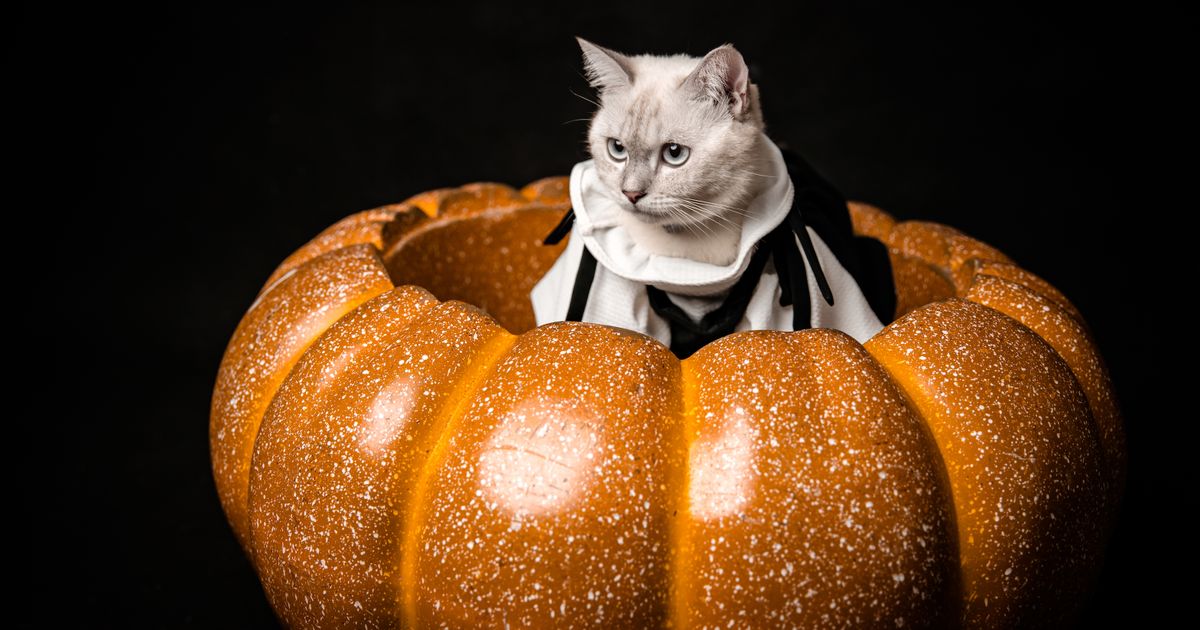
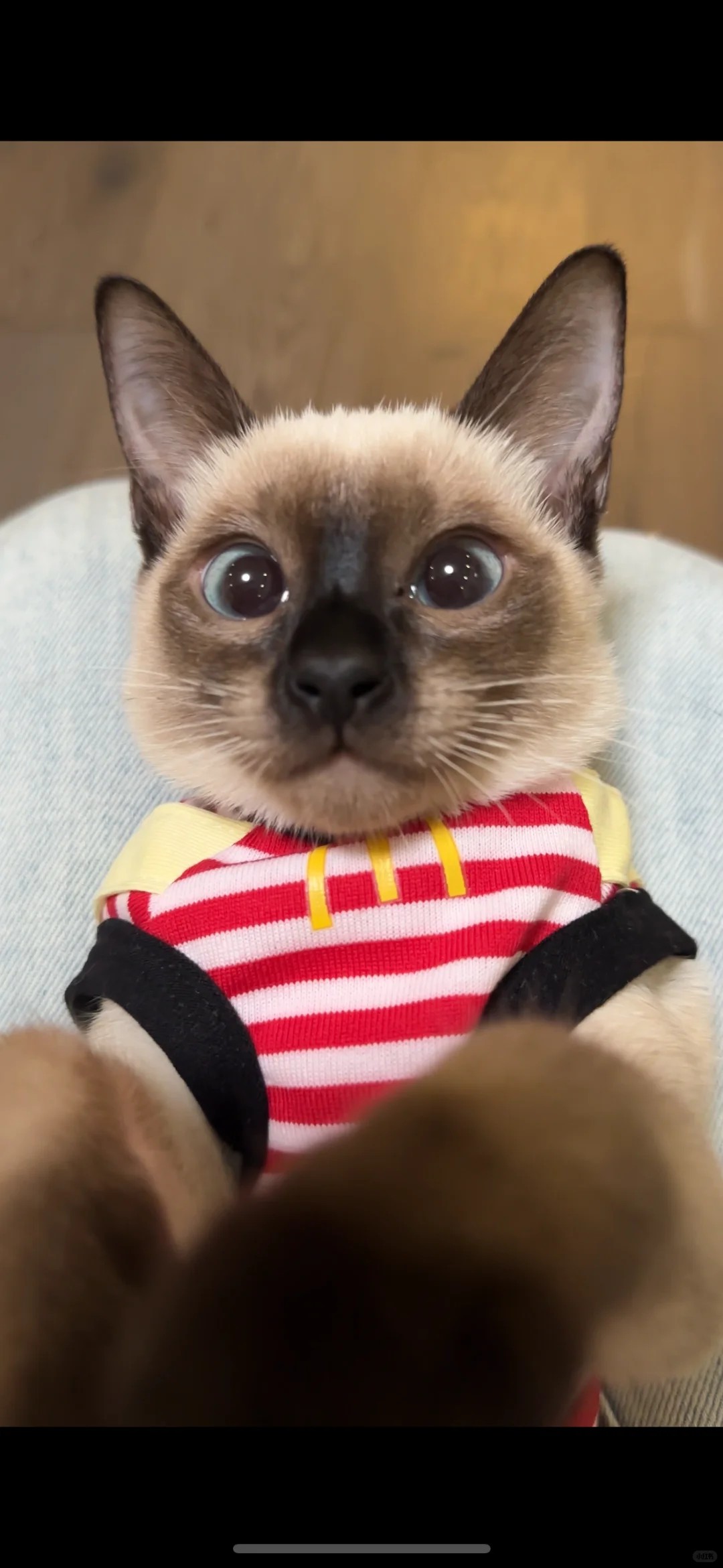
Can cats wear Halloween costumes? The first time I tried, my mischievous orange tabby Miso froze—instantly. Not “cute and stunned” frozen. I mean statuesque, motionless, backwards-walking, suddenly-leaping frozen. The shirt was a tiny witch cloak, perfectly sized, absolutely adorable. Miso disagreed. He stood rigid in the middle of the living room, refused to walk, and then executed a dramatic sideways shuffle that looked like a cat possessed by a very confused ghost.
I laughed, took a photo, and then took the costume off. Because here is the thing I learned the hard way: cats do not wear clothes the way we do, and forcing it can do real emotional damage.
Do Cats Wear Halloween Costumes? Why Some Freeze
A cat’s fur is not just insulation. The hair follicles are packed with touch receptors that feed constant sensory information to the brain. When you wrap a costume around that fur, you suddenly mute the input, and the brain reads it as being wrapped, gripped, trapped. Vets call this restraint stress, and it is a genuine fear response, not a cat being dramatic about fashion.
That is why your cat may stand still, walk backwards, or leap sideways when you first dress her. She is not “acting cute.” She is trying to understand why her body suddenly feels like it is in a straitjacket. The freeze is a survival response, the same one a cat uses when a predator has a grip on her.
Some cats genuinely do not mind clothes. A few cats even seem to enjoy the warmth and will sleep in a sweater. But most cats tolerate costumes, at best. A stressed cat shows it in subtle ways: drooping posture, tucked tail, flattened ears, refusing to move, or a burst of frantic running the moment the outfit comes off.
The Telltale Release Run
Here is a behavior that should stop every owner in their tracks: the moment you take the costume off, your cat bolts around the house like a rocket. That “release run” is the cat finally shaking off the restraint stress. It is fun to watch, but it is evidence that the costume was not fun for her. If your cat does this every time, she is telling you she hated it.
The first night I dressed Miso, he stayed weirdly calm and cuddly while wearing the shirt. I thought he liked it. Then I undid the velcro, he launched across the room, bounced off the sofa, and sprinted three laps of the hallway. I got the message. Calm plus clothes is not the same as happy.
The Three-Step Desensitization Method
If you really want a Halloween photo, you do not have to skip the costume entirely. You do have to train for it. The three-step method below works with treats, play, and patience, and it turns “trapped in a shirt” into “shirt means snacks, briefly.”
Step one: attention shift. Put the costume on and immediately start an interactive game with a wand toy or laser. The goal is to flood the brain with hunting interest so the “what is on my body” signal fades into the background. Miso forgot his witch cloak entirely when the feather wand appeared.
Step two: food bridge. Offer a high-value treat right after dressing. Repeat a few times so the costume becomes a predictor of snacks. Lickable treats and small freeze-dried bits work best because the cat must slow down to eat them.
Step three: gradual duration. Start with ninety seconds, then three minutes, then five, over separate sessions. Increase only when the cat seems relaxed, and never push past thirty minutes in one go. If at any point she fights, hides, or growls, the session is over. Do not power through; you will just be teaching her that costumes predict a wrestling match.
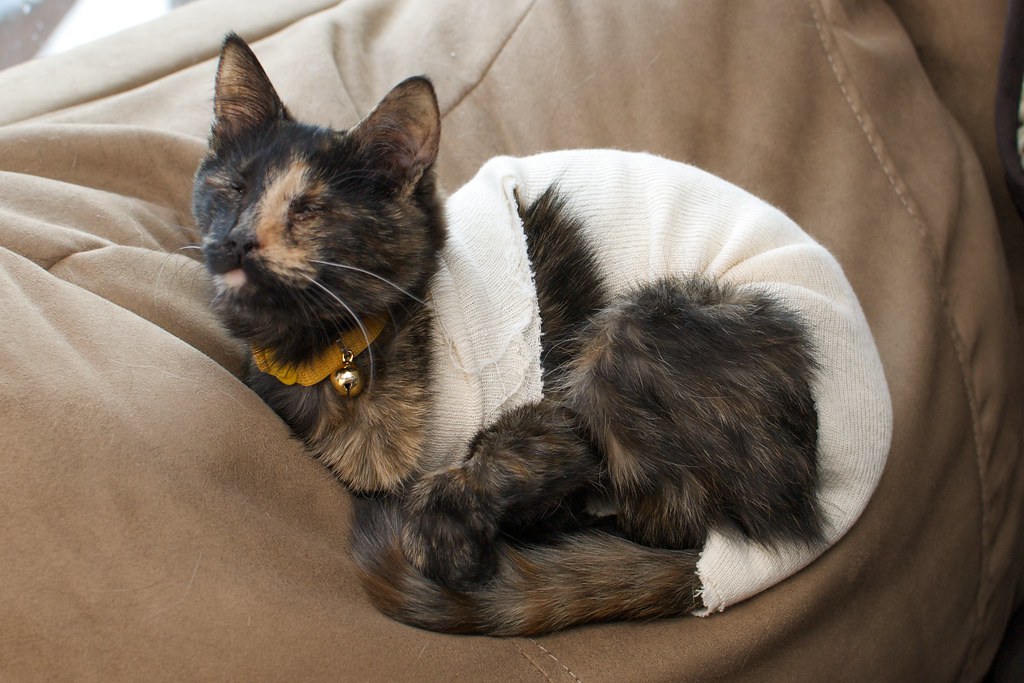
What a Safe Costume Looks Like
Not all cat clothes are created equal. When you shop, screen for these features:
- A loose neckline that does not choke or catch whiskers
- Stretchy fabric across the back that does not press the spine
- A fit that is snug enough to stay on but loose enough for a paw to escape if tangled
- No small parts, buttons, or trim that a cat can chew off and swallow
- Nothing covering the ears, eyes, or mouth, ever
Avoid anything that restricts movement at the shoulders or hips. A costume that makes walking hard is not a costume, it is a restraint. And if the cat can wiggle out of it, let her. Cats who escape on their own are practicing the “I can get out” skill, which is the safety net you want if something goes wrong when you are not watching.
The Calming Vest Question
There is one kind of “clothing” that many cats genuinely benefit from: the snug pressure vest designed for anxiety, not fashion. Unlike a costume, a calming vest applies steady, even pressure across the torso, similar to a gentle hug. For an anxious cat, that pressure can lower stress during storms, travel, or vet visits.
If your cat tolerates a vest but loves her freedom, the calming version is the closest thing to “clothes that help” I have found.
ThunderShirt calming vest on Amazon
cats halloween costume on Amazon
Costume Alternatives That Still Photograph Well
If your cat vetoes clothing completely, you are not out of Halloween content. Photogenic alternatives that involve zero restraint stress:
- A Halloween bandana clipped loosely at the collar (if the cat wears a breakaway collar)
- A festive toy like a bat wand or pumpkin crinkle ball held near the cat in the photo
- A carved pumpkin next to a sleepy cat, no costume required
- A themed blanket draped under the cat for a backdrop effect
The photo can be perfect without the cat wearing anything. The memory is better when the cat is relaxed.
The Golden Rule
Here is the rule I now live by: the cat’s comfort outranks the photo. A costume is a maybe. A happy cat is always the goal. If Miso hates clothes, he gets the pumpkin prop and the good lighting. If your cat loves a sweater in winter, great, let her wear it. If she tolerates a costume for two minutes with treats, great, take the photo and then set her free.
Watch for the real signals: hiding, drooping ears, tucked tail, refusal to move, growling, or the release run. Those are votes against the costume, and in a democracy of two, the cat’s vote counts double.

Costumes and the Bigger Stress Picture
Keep in mind that Halloween piles stressors on top of each other: costume plus doorbell plus strangers plus noise. A cat who might accept a costume in July may refuse it entirely on October 31, and that is fine. If Halloween is already a stressful night for your cat, skip the costume altogether and spend your energy on the quiet room plan. A calm cat needs fewer interventions, not more. My guide to calming products that helped my hiding cat has the tools I reach for when the season gets loud.
And if you are introducing a costume to a brand-new cat who is still settling in, postpone the idea for a few months. New-home cats already feel insecure; adding a restraint experience on top is a recipe for a setback. Let her bond first, and costume-train next season. This introduction guide explains the bonding timeline I used.
Final Word
Can cats wear Halloween costumes? Technically, yes. Should they? Only if they are comfortable, only briefly, and only with a trained, gradual introduction. The best Halloween photo of Miso was not the witch cloak at all. It was him batting at a pumpkin-shaped toy, mid-pounce, eyes huge, completely himself. That is the picture of a happy cat, and it did not cost him a second of stress.
Dress your cat only if she says yes. Give her treats, keep it short, and take the photo the moment she looks relaxed. If she says no, listen. A happy, costume-free cat is worth more than any themed shot.
Disclaimer
Prices and availability are accurate as of the publication date and may change. Please check the product page for current pricing.
This post may contain affiliate links. If you buy through these links, I may earn a commission at no extra cost to you. I only recommend products I’ve actually used with my own cats.
Love cats? Get more tips like this
Join our newsletter for practical cat care guides, honest product roundups, and new posts delivered straight to your inbox. No spam — unsubscribe anytime.